2026 Top Steel Castings Suppliers for Global Buyers

Time:2026-10-26 Author:Aria
0%

Global buyers entering the 2026 steel market need more than a supplier list. They need evidence, traceability, and practical manufacturing insight. Steel Castings support demanding applications, including mining equipment, rail components, turbines, pumps, and heavy machinery. Each application requires different control over chemistry, dimensional accuracy, heat treatment, and non-destructive testing.

The World Steel Association reports that global crude steel production reached approximately 1.88 billion tonnes in 2024. This scale shows the strength of the upstream industry, but it does not guarantee reliable casting quality. Steel foundries convert liquid metal into complex, load-bearing components. Their performance depends on process discipline, engineering experience, and inspection capability. As casting authority John Campbell has stated, “The quality of a casting is determined by the quality of the liquid metal.” That principle remains highly practical. A bright surface can still hide internal shrinkage.

This guide evaluates leading Steel Castings suppliers for global buyers in 2026. It considers production capacity, alloy expertise, foundry equipment, certifications, quality systems, export experience, and after-sales support. Data from the World Steel Association, OECD steel market analysis, and published company records provide useful context. However, supplier information is not always comparable. Some manufacturers publish detailed test results, while others provide only broad claims. That weakness deserves attention. No ranking is perfect. Buyers should verify recent inspection reports, sample approvals, references, and delivery performance before signing contracts. The strongest supplier is not always the largest. Often, it is the foundry that communicates clearly, identifies risks early, and delivers consistent castings when specifications become difficult.
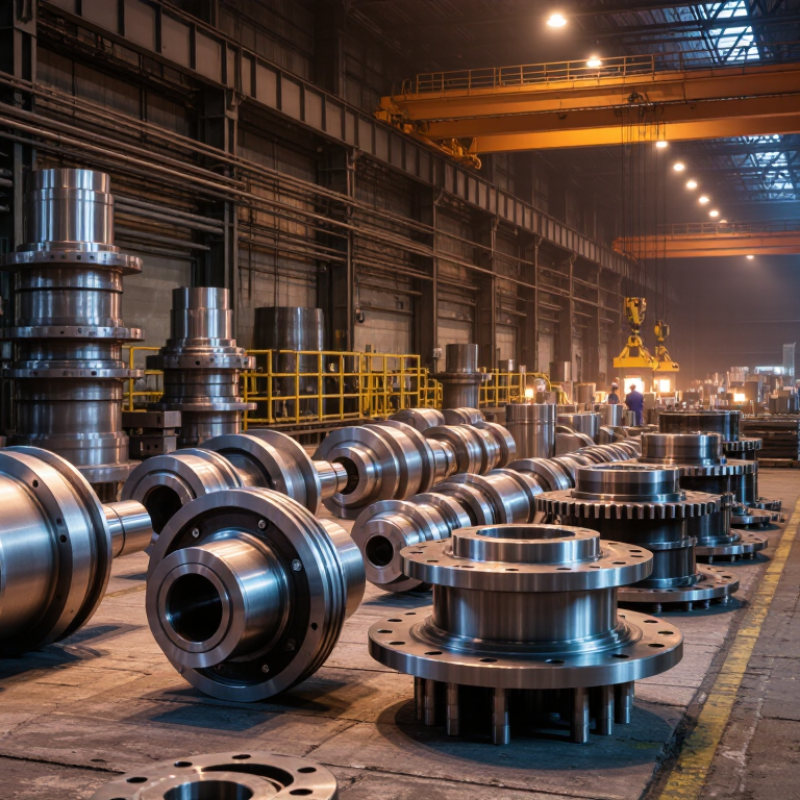
2026 Top Steel Castings Suppliers for Global Buyers

What Are Steel Castings and Why Do Global Buyers Need Them?

Steel castings are metal components formed by pouring molten steel into a shaped mold. After cooling, the part receives cleaning, heat treatment, machining, and inspection. This method supports complex shapes, thick sections, and high loads. Typical applications include mining housings, energy equipment, rail components, pumps, and construction machinery.

Global buyers need steel castings because they combine strength, repairability, and design flexibility. The 2023 Census of World Casting Production reported approximately 109 million metric tons of castings produced worldwide in 2022. Steel represents a smaller share than iron, but it serves demanding applications where impact resistance and heat performance matter. World Steel Association data also recorded about 1.89 billion tonnes of crude steel production in 2023, showing the scale of the supporting supply chain.

Specification quality matters. A casting can look accurate yet fail because of porosity, inclusions, or uneven cooling. Buyers should define steel grade, mechanical properties, dimensional tolerances, heat treatment, non-destructive testing, and traceability. ASTM and ISO standards can support clearer requirements, but standards do not replace practical inspection experience. No specification is perfect. I would still request sample reports, section measurements, and photographs from critical production stages. A cheaper quotation may hide higher machining waste, delayed testing, or difficult field repairs. That risk deserves attention.

Key Criteria for Evaluating Steel Casting Suppliers in 2026

Choosing a steel casting supplier in 2026 requires more than comparing prices. A reliable evaluation starts with production evidence, not polished websites. Ask for recent inspection records, heat numbers, material certificates, and sample dimensional reports. These documents reveal how well the supplier controls chemistry, shrinkage, inclusions, and machining allowances.

Visit the foundry when possible. Observe furnace monitoring, mold preparation, heat treatment, and non-destructive testing in real conditions. Qualified inspectors should explain ultrasonic, magnetic particle, or radiographic results clearly. Check whether the supplier follows recognized standards and maintains calibrated equipment. Capacity also matters. A workshop may produce excellent prototypes but struggle with repeated orders, large castings, or tight delivery windows. Request a realistic production schedule, including tooling, trial pours, testing, rework, and shipping.

Tips: Compare at least three suppliers using the same technical checklist. Review their response speed and technical questions. Good engineers often identify risks before receiving an order. Ask how they manage traceability from raw steel to final inspection. Also examine worker safety, waste handling, and energy controls. These details indicate operational maturity.

Do not trust every impressive claim. I have seen suppliers provide perfect samples, then miss consistency during volume production. A second-site audit or independent inspection can prevent costly surprises. Still, audits are only snapshots. Keep performance records after delivery, including defect rates, corrective actions, packaging damage, and actual lead times. That history may be more valuable than a low initial quotation.

2026 Top Steel Castings Suppliers for Global Buyers - Key Criteria for Evaluating Steel Casting Suppliers in 2026
Evaluation Dimension What Global Buyers Should Evaluate Practical 2026 Benchmark Recommended Evidence Buyer Risk if Not Verified
Material Compliance Ability to produce recognized carbon-steel, low-alloy-steel and stainless-steel grades with controlled chemistry and traceability. 100% heat-lot traceability from raw material through final inspection; chemistry reported against the applicable ASTM, EN, ISO or equivalent specification. Material test certificate, heat number records, spectrometer calibration records and approved material specification. High
Applicable Casting Standards Use of suitable product and inspection standards for pressure, structural, energy, pump, valve and general engineering applications. Clear compliance matrix for standards such as ASTM A216, ASTM A217, ASTM A351, EN 10213 or equivalent customer-approved specifications. Signed compliance matrix, sample inspection plan, standard revision control and deviation-approval procedure. High
Casting Weight and Size Range Actual production capability for the buyer’s required finished dimensions, pouring weight, pattern size and handling limits. Supplier demonstrates at least three comparable reference castings within the required size and weight range, rather than relying only on theoretical furnace capacity. Equipment list, recent anonymized production records, dimensional reports and photographs of comparable castings. Medium
Dimensional Accuracy Control of pattern, mould, machining allowance, distortion and final dimensions throughout serial production. Inspection plan defines datum points, tolerances, measurement method and sampling frequency; critical dimensions are verified with calibrated equipment. FAI report, coordinate-measuring-machine report, dimensional control plan and gauge calibration certificates. High
Internal Soundness Control of shrinkage, porosity, inclusions, hot tears and other discontinuities that may affect pressure integrity or fatigue life. Simulation or documented process controls for critical castings, supported by radiographic, ultrasonic or other buyer-specified non-destructive testing. NDT procedures, technician qualifications, test maps, acceptance criteria and representative reports. High
Surface Quality Condition after shakeout, fettling, blasting, grinding and any repair operations. No unapproved welding, grinding or surface repair in critical areas; visual acceptance criteria are defined before production. Surface-quality standard, repair log, visual inspection checklist and approved repair procedure. Medium
Heat Treatment Capability Control of normalizing, annealing, quenching, tempering, solution treatment or other processes required by the material specification. Furnace temperature uniformity is documented; every applicable batch has a recorded time-temperature cycle and traceable load identification. Heat-treatment charts, furnace survey records, load maps, hardness results and calibrated instrument certificates. High
Mechanical Properties Capability to consistently meet tensile strength, yield strength, elongation, impact and hardness requirements. Test results meet the purchase specification for every required heat or batch; retesting follows the governing standard and is fully documented. Tensile-test report, impact-test report where applicable, hardness map and laboratory accreditation or qualification records. High
Welding and Repair Control Governance of weld repairs, welders, welding procedures and post-weld heat treatment where repairs are permitted. Written repair limits, qualified welding procedures, qualified personnel and customer approval for repairs in pressure-retaining or critical zones. Welding procedure qualification, welder qualification, repair map, consumable certificates and post-repair NDT results. High
Quality Management System Consistency of documented processes, nonconformance control, corrective action and change management. Current third-party quality certification appropriate to the scope of supply, with no unresolved major audit findings affecting the product. Valid certificate, latest audit summary, nonconformance records and corrective-action effectiveness review. Medium
Inspection Independence Whether inspection results are objective, repeatable and accepted by the end user or regulatory authority. Critical orders support buyer-appointed or independent third-party inspection without restricting access to records or production stages. Inspection and test plan, hold-point schedule, inspector qualifications and sample third-party inspection report. Medium
Pattern and Tooling Control Protection of buyer-owned patterns, revision control, maintenance and repeatability of tooling. Tooling is uniquely identified, dimensionally checked after significant modification and stored under documented environmental and access controls. Tool register, revision history, maintenance records, ownership agreement and tooling inspection report. Medium
Production Capacity Ability to meet forecast volume without compromising lead time, quality or inspection coverage. Capacity plan includes furnace availability, moulding throughput, machining hours, bottleneck analysis and contingency capacity for peak demand. Capacity model, monthly output data, machine-utilization report and documented business-continuity plan. Medium
Lead-Time Reliability Predictability from drawing approval and tooling release through sample approval, production and shipment. Supplier provides milestone dates and historical on-time-delivery data by order or project category, not only an average quoted lead time. Project schedule, anonymized delivery-performance report and escalation process for delays. Medium
Machining Integration Availability and control of rough machining, finish machining, dimensional inspection and interface requirements. Machining capability covers the required envelope and tolerance class, with a single controlled drawing and final inspection record. Machine list, process capability data, machining inspection report and approved manufacturing drawing. Medium
Traceability and Digital Records Ability to connect purchase order, drawing revision, heat, mould, inspection, repair, packing and shipment records. Records are searchable by casting identification or heat number and retained for the period specified in the purchase contract. Traceability demonstration, sample digital dossier, document-control procedure and retention policy. High
Nonconformance Performance Frequency, severity and recurrence of defects, including the speed and quality of corrective actions. Supplier reports defect rate, rework rate, scrap rate and corrective-action closure time using a consistent measurement period. Quarterly quality dashboard, eight-discipline corrective-action reports and recurrence analysis. Medium
Testing and Laboratory Access Availability of chemical, mechanical, metallographic and non-destructive testing suitable for the product risk. In-house or qualified external laboratories are defined in advance, with calibrated equipment and controlled test methods. Laboratory scope, equipment calibration records, test-method list and external-lab qualification records. High
Environmental and Energy Controls Management of energy use, sand, slag, dust, emissions, wastewater and other foundry-related environmental impacts. Documented environmental permits and monitoring; supplier can provide product or facility-level environmental data when required by the buyer. Permit records, monitoring reports, waste-disposal records and environmental management documentation. Medium
Packaging and Export Readiness Protection against corrosion, impact, moisture and identification loss during multimodal international transport. Packaging specification covers lifting points, preservation, shock protection, moisture control, marking and export documentation. Packing instruction, loading photographs, packing list, country-of-origin documents and shipping-label sample. Medium
Commercial Transparency Clarity of tooling, testing, machining, freight, packaging, inspection, payment and warranty costs. Quotation separates one-time and recurring costs and states validity, assumptions, exclusions, price-adjustment terms and Incoterms. Itemized quotation, commercial assumptions, Incoterms reference and warranty terms. Medium
Supply-Chain Resilience Exposure to single-source raw materials, subcontractors, energy interruptions, logistics disruption and geopolitical risk. Critical sub-tier suppliers and alternate routes are identified; recovery priorities and communication responsibilities are documented. Business-continuity plan, supplier-risk register, approved-subcontractor list and contingency logistics plan. High
Technical Communication Speed and accuracy of responses concerning drawings, specifications, deviations, inspection results and corrective actions. Named technical contact, controlled communication channel and documented response targets for engineering and quality issues. Responsibility matrix, communication procedure, engineering-change log and sample technical clarification record. Medium

Note: The benchmarks are practical sourcing guidelines for 2026. Final acceptance criteria should be defined in the purchase specification, inspection and test plan, applicable material standard and contract.

Top Steel Casting Suppliers for International Buyers

Top Steel Casting Suppliers for International Buyers

International buyers need more than a low quotation. They need repeatable metallurgy, documented inspection, and stable export coordination. World Steel Association data shows global crude steel production reached about 1.88 billion tonnes in 2024. This scale supports broad casting capacity, but it does not guarantee consistent quality.

Ask suppliers for heat records, chemical analysis, tensile results, and dimensional reports. ISO 9001 certification can support process control, while ISO 14001 signals structured environmental management. For safety-critical parts, review applicable ASTM, EN, or customer-specific requirements before ordering. A capable supplier should explain simulation methods, riser design, heat treatment, and non-destructive testing in practical terms.

Details matter.

International delivery also requires clear Incoterms, export packaging, and traceable labels. The International Energy Agency reports that steelmaking remains a major industrial emissions source, so buyers should examine energy use and recycled content disclosures. These claims need evidence, not attractive wording. A 2024 industry outlook from Deloitte also highlights digital traceability and supply-chain resilience as growing manufacturing priorities.

One weakness remains: supplier audits often inspect the factory once. They may miss seasonal staffing changes or subcontracted machining. Buyers should test a pilot batch, compare defect trends, and keep approval records. The cheapest casting may become expensive after rework, delays, and field failures. Mistakes still happen, even with certified systems. A careful sourcing process leaves room to question every “guaranteed” result.

How to Compare Quality, Certifications, Capacity, and Pricing

When comparing steel casting suppliers, begin with production evidence, not polished claims. Ask for material certificates, heat-treatment records, dimensional reports, and recent inspection results. Quality becomes clearer when samples show surface finish, wall consistency, repair rates, and traceability. Request a trial casting or witnessed inspection. Photos are not enough.

Certifications support confidence, but their scope matters more than their logos. Confirm certificate validity, covered facilities, audit dates, and applicable casting standards. Check whether the same controls apply to your actual alloy and product size. A supplier may hold strong certification yet provide weak project communication. That gap deserves attention.

Capacity should match your schedule, not merely an impressive annual figure. Review furnace size, mold-making resources, machining access, monthly output, and backup equipment. Ask how the supplier handles peak orders and rejected castings. Pricing requires equal detail. Compare metal grades, tooling, machining, testing, packaging, freight, and payment terms line by line. A low quote may exclude essential inspections or later correction costs. No comparison is perfect. A spreadsheet can miss technical risk, especially when drawings are incomplete or tolerances are unrealistic. Leave room for clarification, sample approval, and a documented change process.

2026 Top Steel Castings Suppliers for Global Buyers

Buyer evaluation framework: how quality, certifications, production capacity, and pricing can be weighted when comparing steel casting suppliers.

How to use this chart: Quality covers material traceability, dimensional control, testing, and defect prevention. Certifications include internationally recognized systems such as ISO 9001, ISO 14001, ISO 45001, and applicable customer or industry approvals. Capacity reflects equipment, melting capability, machining resources, and delivery scalability. Pricing should be assessed together with tooling, inspection, logistics, and total landed cost.

Steps for Selecting the Right Steel Casting Supplier

2026 Top Steel Castings Suppliers for Global Buyers

Selecting the right steel casting supplier requires more than comparing quoted prices. Review their experience with your alloy, casting size, geometry, and expected production volume. A supplier making pump bodies may not handle thin, pressure-sensitive components well. Ask for recent inspection records, material certificates, and sample reports. Traceability should connect each casting to its heat number, test results, and production date. Clear evidence matters more than polished claims.

Tips: Request a small trial order before signing a large contract. Check dimensional reports, surface quality, hardness, and repair records. Confirm whether testing is performed internally or by an independent laboratory. Visit the facility when practical, or arrange a live video audit. Ask how they manage nonconforming castings. Their answer can reveal more than a sales presentation.

Evaluate communication as carefully as metallurgy. Reliable suppliers explain risks before production begins and provide realistic lead times. Confirm tooling ownership, packaging methods, export documents, and response procedures for defects. Price can hide pattern costs, extra machining, or repeated inspections. I have found that the lowest quotation is rarely the complete cost. Even experienced buyers can overlook cooling distortion or machining allowance. Recheck the drawing with the foundry engineer. A second technical opinion may prevent an expensive mistake. Select a partner that documents decisions, welcomes questions, and improves its process when evidence proves something went wrong.

FAQS

What are steel castings?

Steel castings are metal parts formed by pouring molten steel into shaped molds. After cooling, they may receive cleaning, heat treatment, machining, and inspection. Think of thick housings, pump bodies, or rail components.

Why do global buyers use steel castings?

They support complex shapes, heavy loads, impact resistance, and high-temperature service. They can also be repaired or machined after casting. That flexibility matters.

What information should buyers include in a casting specification?

Define the steel grade, strength requirements, dimensions, tolerances, heat treatment, and inspection methods. Include traceability requirements for heat numbers and production dates. Vague drawings create expensive confusion.

Which quality problems can affect steel castings?

Porosity, inclusions, cracks, uneven cooling, and distortion can reduce performance. A casting may look smooth while hiding internal defects. Visual checks are not enough.

How can buyers evaluate a supplier before placing a large order?

Request material certificates, chemical results, mechanical tests, dimensional reports, and repair records. Ask whether testing occurs internally or through an independent laboratory. Try a small pilot batch.

Why is traceability important for steel castings?

Traceability connects each casting with its heat number, test results, inspection records, and production date. If a defect appears, buyers can identify affected parts faster. Paperwork matters.

What should buyers check during a factory audit?

Review melting equipment, mold preparation, heat treatment, machining, inspection, storage, and packaging. Ask how nonconforming castings are separated and recorded. One visit may miss seasonal changes.

Is the lowest casting quotation usually the best choice?

Not always. A low price may exclude extra machining, repeated testing, packaging, or repair work. Compare the complete cost, not only the initial number. I still recheck this.

How can buyers reduce delivery and export risks?

Confirm delivery terms, packaging methods, labels, documents, tooling ownership, and defect-response procedures. Use clear photos and section measurements for critical parts. Small details become large delays.

What practical step can prevent an expensive casting mistake?

Ask a foundry engineer to review the drawing before production. Check cooling distortion, machining allowance, wall thickness, and inspection points. A second opinion helps, though it cannot promise perfection.

Conclusion

Steel Castings are essential industrial components used in demanding applications such as energy, construction, transportation, mining, and heavy equipment. This article explains what steel castings are, why international buyers rely on them, and which factors matter when evaluating suppliers in 2026. Key considerations include material quality, dimensional accuracy, production technology, inspection procedures, certifications, manufacturing capacity, lead times, communication, and total pricing.

The guide also presents practical methods for comparing potential suppliers without focusing only on the lowest quotation. Buyers will learn how to assess technical capabilities, quality-control systems, export experience, customization options, and after-sales support. By defining project requirements, requesting relevant documentation and samples, reviewing production capacity, and confirming delivery and payment terms, global buyers can select a reliable steel casting supplier that offers consistent performance, transparent cooperation, and long-term value.


Aria

Aria

Aria is a dedicated marketing professional with a deep passion for innovative strategies and a keen understanding of our company's product offerings. With a wealth of experience in the industry, Aria excels at crafting engaging content that highlights the unique features and benefits of our......