What Are Carbon Alloy Castings and How Are They Used?

Time:2026-09-17 Author:Charlotte
0%

Carbon Alloy Castings are shaped metal components produced by pouring molten carbon-based alloy into prepared molds. Their performance depends on carbon content, alloying elements, cooling conditions, and heat treatment. Small changes can affect hardness, toughness, weldability, and resistance to wear.

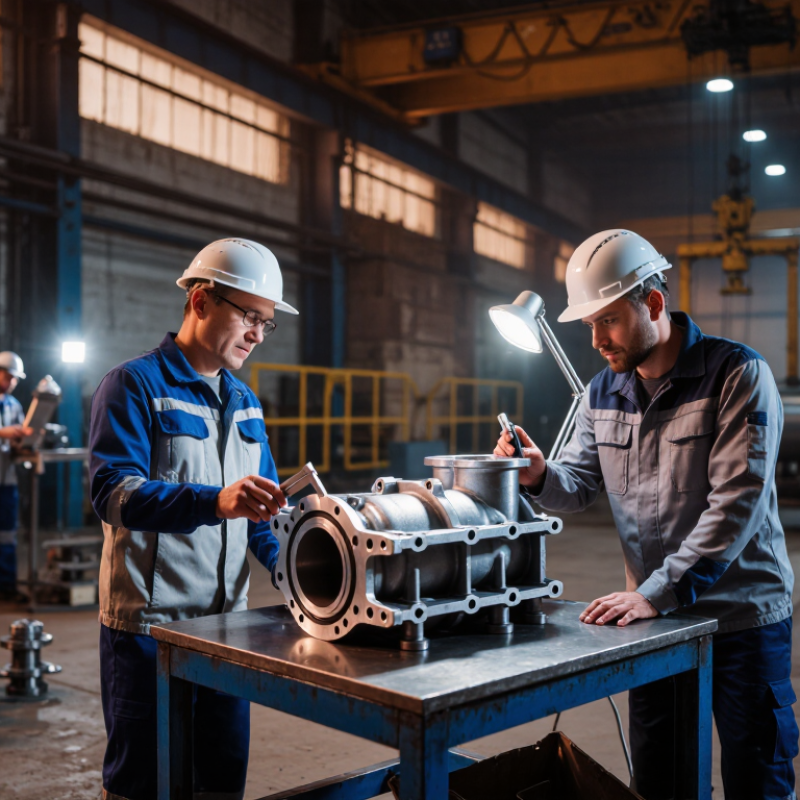
The process begins with pattern design, mold preparation, melting, pouring, cooling, and finishing. In a working foundry, technicians may examine a pump body under bright inspection lights. They check its surface, dimensions, and possible shrinkage cavities. Non-destructive testing can reveal internal flaws that visual checks may miss. Chemical analysis also confirms whether the alloy matches the required specification.

These castings serve demanding industries. Manufacturers use them for valve bodies, pump housings, gear components, rail parts, construction equipment, and industrial machinery. A carbon steel casting may suit a moderate-load housing, while a chromium- or nickel-alloyed grade may offer stronger wear or corrosion resistance. The correct choice depends on load, temperature, fluid contact, machining needs, and service environment.

Standards such as ASTM, EN, and ISO can guide material selection and inspection. However, a standard alone does not guarantee reliable service. Design details matter. So does process control.

The boundary is not always tidy. Similar components may require different alloys because their operating conditions differ. Engineers must compare drawings, test data, supplier records, and real service demands before approving a casting. This practical review helps explain how Carbon Alloy Castings move from molten metal to dependable industrial equipment. Mistakes remain possible, especially when cost pressures shorten testing or obscure critical design assumptions.
What Are Carbon Alloy Castings and How Are They Used?

What Carbon Alloy Castings Are and How They Are Defined

What Are Carbon Alloy Castings and How Are They Used?

What Carbon Alloy Castings Are and How They Are Defined

Carbon alloy castings are steel components formed by pouring molten iron-based alloy into a mold. Carbon provides hardness and strength. Other elements adjust performance. Common additions include chromium, nickel, molybdenum, manganese, and silicon.

The term needs care. Carbon steel castings mainly depend on carbon content and heat treatment. Alloy steel castings contain deliberate additions beyond normal carbon steel chemistry. These additions can improve wear resistance, toughness, corrosion resistance, or high-temperature stability. Standards usually define them through chemical limits, tensile properties, impact performance, and heat-treatment conditions. The boundary is not always tidy.

A foundry may produce a thick valve body, pump casing, gear blank, or rail component from the same basic process. Engineers select the grade according to load, temperature, fluid exposure, and repair tolerance. A rough mold surface may later become a machined sealing face. That detail matters.

The 2023 World Casting Census reported approximately 110 million metric tonnes of global castings in 2022. Steel castings represented a smaller share than iron and aluminium castings, but they served demanding applications. The International Energy Agency identifies iron and steel production as responsible for roughly 7% to 9% of global energy-related emissions. This makes efficient design important, not optional. Less metal, fewer defects, and accurate machining can reduce waste. Yet material savings alone can be misleading. A thinner casting may fail earlier, requiring replacement and more energy.

How Carbon Alloy Castings Are Made Step by Step

Carbon alloy castings begin with a drawing, a pattern, and a clear service requirement. Engineers select carbon content, alloying elements, and wall thickness. According to the World Steel Association’s 2025 statistical release, global crude steel production reached about 1.84 billion tonnes in 2024. That scale makes controlled chemistry essential. Foundry teams prepare a sand mold around the pattern, leaving gates and risers for metal flow. The mold must be dry, stable, and accurately aligned.

The furnace then melts charge materials at a monitored temperature. Technicians test a sample before pouring. They adjust carbon, manganese, silicon, and other elements when results miss the specification. Molten metal enters the mold through the gating system. Solidification follows, usually from thicker sections toward the risers. After cooling, workers remove sand, gates, and excess metal. Heat treatment can improve strength and toughness. Inspectors use visual checks, dimensional measurement, hardness testing, and non-destructive examination. ASTM casting standards often guide acceptance criteria, but each project still needs engineering judgment. The process is unforgiving. A small temperature error can create shrinkage, cracks, or weak regions.

Tips: Keep a heat record for every pour. Verify mold moisture before casting. Review radiographs carefully, especially around junctions. Do not assume a clean surface proves internal quality. In practice, even experienced teams can miss a defect. That possibility deserves honest review.

Key Properties That Influence Their Performance

What Are Carbon Alloy Castings and How Are They Used?

Carbon alloy castings are metal components formed by pouring molten steel into prepared molds. Their carbon content provides strength and hardness, while elements such as chromium, nickel, or molybdenum adjust performance. These castings appear in valves, pump bodies, gear housings, structural supports, and heavy industrial machinery. Their shape flexibility helps engineers produce complex parts with fewer assembled pieces.

Key Properties That Influence Their Performance

Tensile strength matters under pulling forces. Hardness improves resistance to indentation and surface wear. Toughness helps a casting absorb sudden impact without cracking.

High carbon levels can increase hardness, but they may reduce ductility and make welding more difficult. That trade-off deserves attention.

Castability also affects final reliability. Poor mold filling can leave shrinkage, inclusions, or internal porosity. These defects may remain invisible during normal use. Thermal stability becomes important near furnaces, engines, and high-temperature piping. Some alloying elements improve heat resistance, while others support corrosion resistance in wet environments. The correct balance depends on load, temperature, chemicals, and maintenance conditions.

A thick section cools slowly.

Heat treatment can refine the structure and improve toughness. However, excessive treatment may distort dimensions or create uneven properties. In practical inspections, technicians often combine visual checks, hardness testing, dimensional measurements, and non-destructive examination.

A casting can meet one specification and still perform poorly in service. That is an easy point to overlook. Careful material selection, controlled pouring, and realistic testing usually provide more dependable results than chasing a single impressive strength value.

Common Industrial Uses of Carbon Alloy Castings

What Are Carbon Alloy Castings and How Are They Used?

Carbon alloy castings are metal components formed by pouring molten steel into prepared molds. Their carbon content provides strength, while added elements can improve hardness, toughness, or resistance to wear. Engineers select the alloy according to load, temperature, corrosion exposure, and production cost. Shape matters too. Complex housings can often be cast with fewer welded parts.

Common Industrial Uses of Carbon Alloy Castings

Factories use these castings for pump bodies, valve housings, pipe fittings, and industrial gear components. Their strength helps equipment manage pressure and repeated mechanical stress. In mining, castings support crusher frames, bucket teeth, and wear plates exposed to abrasive rock. Construction machinery also uses them in joints, brackets, and heavy-duty drivetrain parts.

Power facilities may install cast steel castings in turbine supports, boiler components, and high-temperature piping systems. Rail equipment uses them for couplers, suspension parts, and braking assemblies. Agricultural machines need durable castings for plow frames, transmission cases, and harvesting mechanisms. These parts often face mud, vibration, and sudden impact.

They are not a universal answer. Poor mold design can create shrinkage, cracks, or hidden porosity. I have seen small defects become costly failures after repeated loading. Careful heat treatment, dimensional checks, and non-destructive testing reduce that risk. Engineers should also review real service conditions, not only catalog specifications. A strong alloy can still fail when maintenance, alignment, or operating temperatures are overlooked.

Factors for Selecting the Right Carbon Alloy Casting

What Are Carbon Alloy Castings and How Are They Used?

Carbon alloy castings are shaped metal parts made by pouring molten steel into prepared molds. Carbon supplies strength and hardness. Elements such as chromium, nickel, molybdenum, or manganese adjust toughness, wear resistance, and heat performance. These castings serve pumps, valves, mining equipment, pressure systems, and heavy machinery. Their value depends on the service conditions, not simply the alloy grade.

Factors for Selecting the Right Carbon Alloy Casting

Start with the actual load, temperature, impact, and corrosion exposure. The NACE IMPACT study estimated global corrosion costs at about 3.4% of worldwide gross domestic product. That figure makes surface protection and alloy selection practical cost decisions. The World Steel Association reported 1,888.2 million tonnes of crude steel production in 2023. Steel is abundant, but suitable cast steel still requires careful control.

A higher alloy level is not automatically better. Extra alloying can increase cost, heat-treatment difficulty, or machining time. Carbon content also affects hardness and weldability. Designers should check section thickness, cooling behavior, dimensional tolerance, casting size, inspection requirements, and expected service life. A small test bar may perform well. A thick casting can cool unevenly. That is where selection gets messy.

Tips: Match the chemistry to the failure mode. Request tensile, impact, hardness, and non-destructive testing data. Compare lifecycle cost, not only purchase price. Review the decision after field use; real wear can challenge the original specification.

What Are Carbon Alloy Castings and How Are They Used? - Factors for Selecting the Right Carbon Alloy Casting
Material or Selection Dimension Typical Data or Requirement Primary Advantages Common Applications Important Selection Considerations
Carbon Steel Castings
ASTM A216 WCA
Carbon steel casting grade for pressure-containing components.
Typical minimum tensile strength: 415 MPa.
Typical minimum yield strength: 205 MPa.
Maximum carbon content is commonly about 0.25%.
Good general-purpose strength, machinability, and weldability when properly processed. Valve bodies, pump casings, pressure-containing housings, and general industrial equipment. Suitable for moderate pressure and temperature service. Confirm the applicable standard, heat treatment, wall thickness, and impact requirements before specification.
Carbon Steel Castings
ASTM A216 WCB
Widely used carbon steel pressure-casting grade.
Typical minimum tensile strength: 485 MPa.
Typical minimum yield strength: 250 MPa.
Maximum carbon content is commonly about 0.30%.
Balanced strength, cost, castability, and availability for many industrial services. Process valves, flanges, pump bodies, pressure vessels, pipelines, and power-generation equipment. A common choice when corrosion resistance is not the primary requirement. Welding procedures and preheating may be required depending on section size and carbon equivalent.
Carbon Steel Castings
ASTM A216 WCC
Higher-strength carbon steel casting grade than WCA.
Typical minimum tensile strength: 485 MPa.
Typical minimum yield strength: 275 MPa.
Maximum carbon content is commonly about 0.25%.
Higher specified yield strength while retaining the basic advantages of carbon steel. Pressure valves, pump casings, piping components, and heavy-duty process equipment. Consider when strength requirements exceed those of WCA. Verify toughness, weldability, and section-thickness limitations in the governing specification.
Low-Temperature Carbon Steel
ASTM A352 LCB / LCC
Carbon steel casting grades designed for low-temperature pressure service.
Typical minimum tensile strength: 485 MPa.
Typical minimum yield strength: 275 MPa.
Impact testing is specified at low temperatures, commonly around -46°C for applicable grades.
Improved resistance to brittle fracture at low operating temperatures compared with ordinary carbon steel grades. Outdoor piping, cryogenic-adjacent equipment, low-temperature valves, liquefied-gas systems, and cold-region installations. Specify the design minimum temperature and required Charpy impact energy. Low-temperature performance depends on grade, heat treatment, thickness, and inspection results.
Chromium-Molybdenum Alloy Steel
ASTM A217 WC6
Low-alloy cast steel containing approximately 1.25% chromium and 0.50% molybdenum.
Typical minimum tensile strength: 485 MPa.
Typical minimum yield strength: 275 MPa.
Better elevated-temperature strength and oxidation resistance than plain carbon steel. Steam valves, boiler components, power-plant piping, and moderately high-temperature pressure equipment. Requires controlled heat treatment and qualified welding procedures. Check post-weld heat treatment requirements and resistance to high-temperature creep.
Chromium-Molybdenum Alloy Steel
ASTM A217 WC9
Low-alloy cast steel containing approximately 2.25% chromium and 1.00% molybdenum.
Typical minimum tensile strength: 515 MPa.
Typical minimum yield strength: 310 MPa.
Greater high-temperature strength, oxidation resistance, and thermal stability than lower-alloy carbon steel grades. Superheated-steam valves, thermal power equipment, refinery service, and high-temperature pressure systems. Select when temperature and creep resistance are more demanding. Welding, preheating, post-weld heat treatment, and hardness control are critical.
Operating Temperature Carbon steel is commonly selected for moderate-temperature service, while chromium-molybdenum grades are used when elevated-temperature strength and creep resistance are required. Helps prevent loss of strength, excessive deformation, oxidation, and premature failure. Steam systems, hot oil equipment, furnaces, boilers, and process piping. Identify minimum and maximum design temperatures, thermal cycling, heating rate, cooling rate, and any creep exposure.
Pressure and Mechanical Load Required tensile strength, yield strength, fatigue resistance, impact toughness, and wall thickness should be determined from the design calculations. Ensures the casting can withstand internal pressure, external loads, vibration, and operating stresses. Valve bodies, pump casings, pressure vessels, manifolds, and structural cast components. Use the minimum properties required by the applicable code or material standard, not only nominal composition.
Corrosion and Oxidation Environment Plain carbon and low-alloy steels generally provide limited resistance to strong acids, chlorides, wet carbon dioxide, and aggressive aqueous environments. Carbon alloy castings can be economical in dry, neutral, or controlled environments. General process equipment, utility systems, water-service components, and non-corrosive industrial machinery. Evaluate pH, chlorides, sulfur compounds, erosion, cavitation, corrosion allowance, coatings, and possible need for stainless or other corrosion-resistant alloys.
Castability and Part Geometry Castings are suitable for complex shapes, internal passages, thick sections, integrated bosses, and reduced-part-count designs. Can reduce machining, welding, assembly steps, and material waste compared with fabricating the same shape from multiple pieces. Pump housings, valve bodies, impellers, manifolds, brackets, and large equipment frames. Review wall-thickness transitions, riser design, shrinkage, hot spots, core support, dimensional tolerances, and machining allowances.
Weldability and Repair Weldability generally decreases as carbon content, alloy content, section thickness, and hardenability increase. Properly controlled welding can enable joining, fabrication, and approved casting repairs. Large pressure castings, repairable industrial components, and assemblies requiring welded attachments. Require qualified welding procedures, suitable filler metal, preheat or interpass temperature control, hydrogen control, and post-weld heat treatment when specified.
Heat Treatment Normalizing, tempering, annealing, or quenching and tempering may be required depending on the grade and standard. Improves strength, toughness, dimensional stability, and microstructural uniformity. Pressure-retaining castings, high-temperature components, and heavy-section parts. Confirm the required treatment cycle, hardness range, cooling method, section thickness, and mechanical-test location.
Inspection and Quality Level Typical controls include chemical analysis, tensile testing, impact testing where required, hardness testing, dimensional inspection, visual examination, and non-destructive testing. Detects shrinkage, porosity, cracks, inclusions, incomplete fusion in repairs, and dimensional defects. Pressure equipment, safety-critical machinery, energy systems, and heavy industrial components. Define acceptance criteria for radiography, ultrasonic testing, magnetic-particle testing, liquid-penetrant testing, and pressure testing before production.
Cost and Availability Carbon steel castings are generally less expensive than higher-alloy materials, while alloy additions, heat treatment, machining, inspection, and certification increase total cost. Provides a cost-effective solution when extreme corrosion resistance or high-temperature capability is unnecessary. General industrial machinery, infrastructure, process equipment, and replacement components. Compare total lifecycle cost, including casting tooling, machining, inspection, maintenance, corrosion allowance, downtime, and replacement frequency.

Note: Mechanical-property values and chemical-composition ranges shown are typical minimum or nominal values associated with commonly referenced material specifications. Final requirements depend on the governing standard, product form, heat treatment, section thickness, service conditions, and applicable design code.

FAQS

What are carbon alloy castings?

They are steel components made by pouring molten iron-based alloy into prepared molds. Carbon adds hardness and strength. Other elements adjust performance.

How do carbon steel castings differ from alloy steel castings?

Carbon steel castings mainly rely on carbon content and heat treatment. Alloy steel castings include deliberate additions beyond normal carbon chemistry. The boundary stays blurry.

Which alloying elements are commonly used?

Common additions include chromium, nickel, molybdenum, manganese, and silicon. Each element can influence toughness, wear resistance, corrosion resistance, or heat stability.

Where are carbon alloy castings used?

They can form valve bodies, pump casings, gear blanks, and rail components. Engineers consider load, temperature, fluid exposure, and repair tolerance.

How are these castings produced?

Engineers prepare a drawing, pattern, and service requirement. Foundry workers build a mold with gates and risers. The alloy is melted, tested, adjusted, and poured.

Why are gates and risers important?

Gates guide molten metal into the mold. Risers supply extra metal during shrinkage. Poor design can create weak areas or internal voids.

What inspections are commonly performed?

Inspectors check surfaces, dimensions, hardness, and internal conditions. Non-destructive testing may reveal hidden cracks or shrinkage. A clean surface proves little.

How does heat treatment affect the casting?

Heat treatment can improve strength and toughness. The correct cycle depends on chemistry, section thickness, and required properties. Results still need verification.

What practical problems can occur during casting?

Temperature errors may cause shrinkage, cracks, or weak regions. Mold moisture and alignment also matter. Small errors matter.

How can foundries reduce waste and energy use?

Accurate design can reduce excess metal, defects, and machining. Thinner sections are not automatically better. Early failure may create greater environmental costs.

Conclusion

Carbon Alloy Castings are metal components produced by pouring a carbon-based alloy into a shaped mold and allowing it to solidify. Their performance depends on the balance of carbon and other alloying elements, as well as the casting method, cooling rate, and heat treatment used during production. The manufacturing process generally includes material selection, melting, mold preparation, pouring, cooling, removal, cleaning, and quality inspection. These steps help control the casting’s strength, hardness, toughness, wear resistance, and dimensional accuracy.

Because of their adaptable mechanical properties and practical production cost, Carbon Alloy Castings are widely used in machinery, construction equipment, transportation systems, energy facilities, and industrial processing applications. Selecting the right casting requires evaluating operating temperature, load, impact, corrosion, wear, required service life, shape complexity, and production volume. A suitable choice should also consider heat-treatment needs, surface requirements, maintenance conditions, and overall cost to ensure reliable performance in its intended environment.


Charlotte

Charlotte

Charlotte is a seasoned marketing professional with a deep understanding of the company's portfolio and a passion for elevating its presence in the market. With a keen eye for detail and a commitment to excellence, she ensures that our professional blog is regularly updated with insightful articles......