Choosing a China Best Fabricated Steel Castings Supplier requires more than comparing prices. It requires evidence, process control, and practical engineering experience. Fabricated Steel Castings must perform reliably under pressure, vibration, heat, and repeated loading. A capable supplier understands these conditions before production begins.
Experienced manufacturers review drawings, steel grades, tolerances, welding requirements, and service environments. They may recommend changes to wall thickness, joint locations, or machining allowances. These details can reduce distortion and improve final fit. Material certificates, heat numbers, welding records, and dimensional reports should remain traceable. Clear documentation builds confidence.
Inspection matters.
Reliable quality systems often include spectrometer testing, ultrasonic inspection, magnetic particle testing, hardness checks, and final dimensional measurement. However, inspection alone cannot repair weak design decisions. That point is easy to overlook. Supplier selection should also consider pattern preparation, casting capability, welding skill, heat treatment, machining capacity, and export experience.
A dependable Chinese supplier communicates realistic lead times and explains technical risks directly. They should provide samples, production photographs, inspection records, and references when appropriate. Certifications can support credibility, but certificates do not replace consistent performance. Ask how nonconforming parts are handled. Ask who approves process changes.
No supplier is perfect for every application. Some projects need stronger engineering support, while others prioritize short lead times or complex machining. An honest evaluation may reveal gaps on both sides. The best partnership grows through clear drawings, timely feedback, and measured improvement. With disciplined manufacturing and transparent communication, Fabricated Steel Castings can become a stable, cost-effective part of demanding industrial equipment.
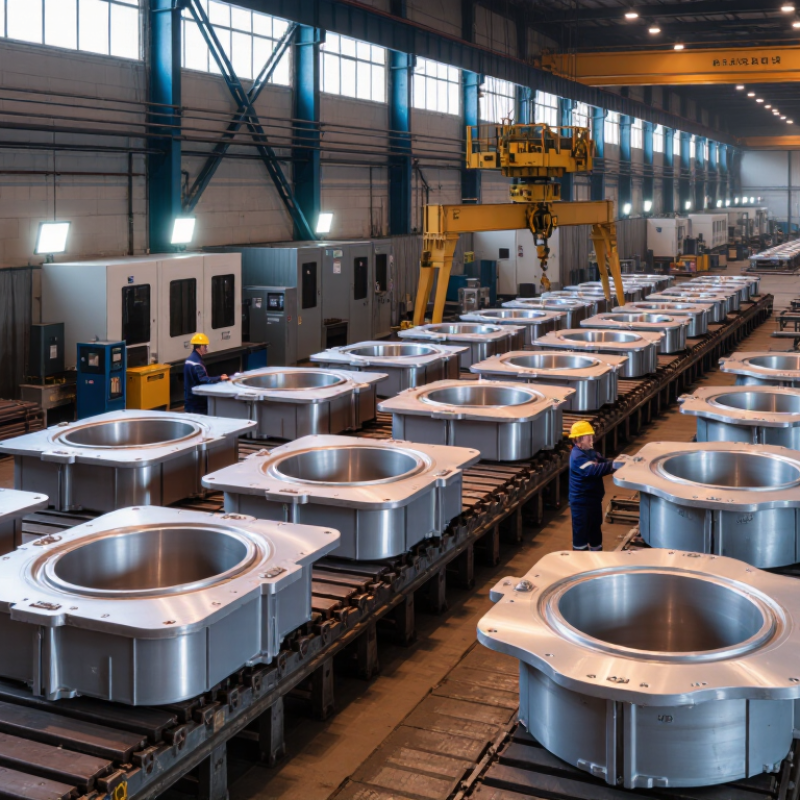
Types of Fabricated Steel Castings Supplied in China
China supplies several types of fabricated steel castings for heavy equipment, energy systems, construction machinery, and industrial processing lines. Carbon steel castings suit frames, brackets, housings, and general load-bearing parts. Alloy steel castings provide better strength under impact, pressure, or repeated loading. Stainless steel castings resist corrosion in wet, chemical, and food-processing environments.
Wear-resistant castings are used for liners, crusher parts, buckets, and material-handling components. Heat-resistant grades support furnace parts, burner supports, and high-temperature transfer equipment. Some suppliers also produce low-temperature steel castings for cold-region service. Fabricated assemblies may combine cast sections with welded steel plates, machined holes, and reinforced supports. This reduces installation work, although the joint design needs careful review.
Practical experience shows that material selection must follow the working environment, not only the drawing. A thick casting can still fail if cooling causes internal stress. That matters.
Reliable production normally includes pattern control, chemical analysis, heat treatment records, dimensional inspection, and non-destructive testing. Ultrasonic testing can reveal internal discontinuities, while magnetic particle testing checks surface cracks on suitable grades. Traceable heat numbers improve accountability from melting to shipment. Still, inspection is not perfect. Sampling may miss a local defect, and overly strict repair welding can alter material properties. Engineers should review acceptance standards, service loads, machining allowances, and welding procedures before approval.
| Casting Type | Common Material Grades | Typical Standards | Typical Applications | Indicative Unit Weight | Typical Section Thickness | Key Characteristics |
|---|---|---|---|---|---|---|
| Carbon Steel Castings | ASTM A216 WCA, WCB, WCC; EN 10213 1.0619 | ASTM A216; EN 10213; ASME Section II | Valve bodies, pump casings, pressure-bearing housings, pipe fittings | 5–5,000 kg | 8–250 mm | Good weldability, strength, and cost efficiency |
| Low-Temperature Carbon Steel Castings | ASTM A352 LCB, LCC; EN 10213 1.6220 | ASTM A352; EN 10213; impact-test requirements | Cryogenic valves, liquefied-gas equipment, low-temperature pipelines | 5–3,000 kg | 10–220 mm | Maintains impact toughness at low temperatures |
| Low-Alloy Steel Castings | ASTM A217 WC1, WC5, WC6, WC9; EN 10213 1.7335 | ASTM A217; EN 10213; ASME Section II | Steam valves, boiler components, turbine casings, high-temperature pressure parts | 10–5,000 kg | 10–300 mm | Improved creep, oxidation, and elevated-temperature strength |
| Martensitic Stainless Steel Castings | ASTM A217 CA15; ASTM A743 CA6NM | ASTM A217; ASTM A743; ASTM A744 | Hydraulic turbine components, valve trim, pump parts, wear-resistant housings | 5–4,000 kg | 8–250 mm | High strength, hardness, and moderate corrosion resistance |
| Austenitic Stainless Steel Castings | ASTM A351 CF8, CF8M, CF3M; EN 10213 1.4408 | ASTM A351; ASTM A743; EN 10213 | Chemical pumps, food-processing equipment, marine fittings, process valves | 2–3,500 kg | 6–220 mm | Excellent general corrosion resistance and toughness |
| Duplex Stainless Steel Castings | ASTM A890 Grade 4A, 5A; ASTM A995 Grade 4A, 5A | ASTM A890; ASTM A995; NORSOK M-630 where specified | Seawater pumps, offshore equipment, desalination systems, chemical-process components | 5–3,000 kg | 8–250 mm | High chloride resistance and higher yield strength than standard austenitic grades |
| Heat-Resistant Stainless Steel Castings | ASTM A297 HK, HP; ASTM A351 CF8C | ASTM A297; ASTM A351; project-specific heat-treatment specifications | Furnace parts, radiant tubes, petrochemical fittings, high-temperature brackets | 5–2,500 kg | 8–180 mm | Designed for oxidation resistance and prolonged high-temperature service |
| Wear-Resistant Alloy Steel Castings | High-manganese steel; chromium-molybdenum alloy steel; project-specified grades | ASTM A128 for manganese steel; purchaser-specific specifications | Crusher liners, impact plates, mill components, mining and aggregate equipment | 10–8,000 kg | 15–350 mm | High resistance to impact and abrasive wear |
| Centrifugally Cast Steel Tubes | Carbon steel, low-alloy steel, stainless steel, heat-resistant alloys | ASTM A426; ASTM A451; applicable project standards | Furnace tubes, sleeves, pump barrels, high-temperature process tubes | 20–6,000 kg | 8–100 mm | Dense structure and good concentricity for tubular components |
| Large Structural and Machinery Castings | Carbon steel, low-alloy steel, stainless steel, customized grades | EN 10293; ASTM A148; customer drawings and inspection plans | Base frames, gear housings, machine beds, construction and power equipment | 500–30,000 kg | 20–500 mm | Suitable for large, complex, load-bearing components |
Note: Weight and section-thickness ranges are indicative manufacturing ranges rather than universal limits. Final dimensions, tolerances, heat treatment, inspection requirements, and material grades should be confirmed against the approved drawing, purchase specification, and applicable standard.
Carbon steel castings suit frames, brackets, housings, and general load-bearing parts. Alloy steel handles impact and repeated loading better. Stainless steel resists moisture and chemical exposure. Wear-resistant and heat-resistant grades serve harsher locations.
Select the material according to temperature, moisture, pressure, impact, and loading cycles. A very hard casting may still have poor toughness. Consider weldability, machining cost, and service life together. Drawings alone may not show the full risk.
Low-temperature steel castings can support equipment used in cold regions. Toughness must remain acceptable at the lowest operating temperature. Test requirements should match the actual climate. Cold service is unforgiving.
Pattern preparation controls mold accuracy and machining allowances. Pouring must limit turbulence, which can trap oxide films. Heat treatment adjusts hardness and internal stress. Welding and machining need separate process controls.
Internal stress may develop during uneven cooling. Porosity, cracks, incomplete fusion, and subsurface discontinuities can also appear. Thick sections deserve extra attention. Defects are not always visible.
Visual inspection checks surfaces, welds, undercut, cracks, and visible porosity. Ultrasonic testing can locate internal discontinuities. Magnetic-particle testing checks surface cracks on suitable steel grades. Radiographic testing may support critical sections.
Request material certificates, chemical analysis, mechanical test results, and heat-treatment records. Ask for calibration records and non-destructive testing reports. Final dimensional records should identify the actual casting. Loose paperwork is not enough.
Each heat should receive a traceable number from melting through shipment. Marked parts and inspection photographs provide useful evidence. Missing heat numbers can weaken an otherwise careful system. Documentation still needs human review.
No. Repair welding can change local material properties and internal stress. The repair procedure, qualified personnel, and acceptance limits require review. Excessively strict repairs may also create new problems. Approval should follow the service risk.
Confirm material grade, service loads, machining allowances, datum points, weld details, and inspection criteria. Review the inspection plan before production begins. Independent inspection may help with heavy or pressure-related parts. Plans often need revision.
China is a major source of Fabricated Steel Castings for industries that require strong, durable, and precisely engineered components. Suppliers may offer carbon steel, alloy steel, stainless steel, and wear-resistant steel castings in various shapes and sizes. Their manufacturing processes commonly include pattern preparation, molding, melting, pouring, heat treatment, machining, and surface finishing. The selection of material and process depends on the component’s operating conditions, load requirements, temperature, and corrosion exposure.
Reliable suppliers should be evaluated through their production capabilities, technical expertise, quality management systems, traceability, and communication standards. Inspection procedures may include chemical analysis, dimensional checks, visual inspection, ultrasonic or radiographic testing, hardness testing, and mechanical performance verification. High-quality Fabricated Steel Castings are widely used in construction machinery, energy equipment, transportation systems, mining, marine engineering, and industrial processing. Their main advantages include structural strength, design flexibility, long service life, repairability, and cost efficiency when manufactured under consistent quality controls.

 Junlong