Choosing a stainless steel casting supplier is not just a matter of comparing prices. The right foundry must match the component, production volume, material grade, and inspection needs. A pump housing, valve body, or marine fitting may look simple on a drawing, yet small differences in wall thickness and surface finish can affect performance.
This guide introduces ten manufacturers associated with Stainless Steel Castings in China. It offers a starting point for buyers evaluating foundry experience, casting processes, machining support, quality controls, and export capabilities. These details matter. A supplier’s ability to produce a sample is useful, but repeatable results across a full production run matter more. Ask about material traceability, dimensional checks, and how defects are handled. Request recent project examples when possible.
No list can fully capture a factory’s strengths or current capacity. That is a limitation worth keeping in mind. Company profiles and capabilities can change, and a strong reputation does not guarantee a fit for every project. Buyers should verify technical claims directly, review relevant certificates, and compare quotations against the same specifications. The manufacturers featured here provide a practical shortlist, not a final verdict. A careful conversation with each candidate may reveal more than a polished brochure.
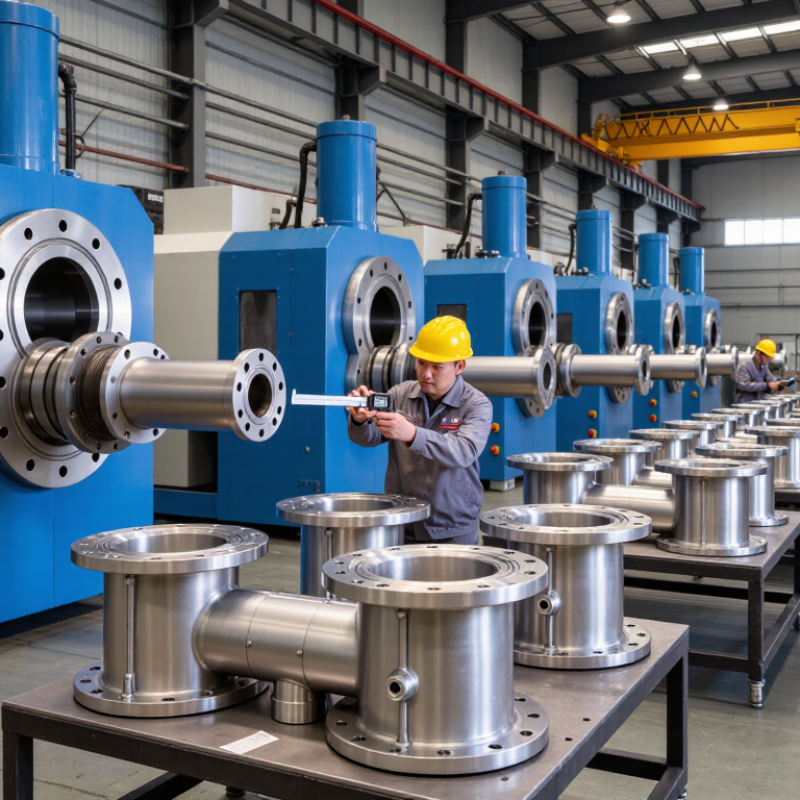
Stainless Steel Casting Basics: The 10.5% Chromium Threshold for Corrosion Resistance
Stainless steel begins with a measurable boundary: at least 10.5% chromium by mass under the EN 10088-1 definition. This is not a guarantee of rust-free service. Chromium reacts with oxygen to form a thin passive film, which can rebuild after minor surface damage when conditions allow. Below the threshold, protective behavior becomes less dependable. The threshold is a floor, not a finish line. That distinction matters.
For cast components, buyers should verify heat chemistry, not rely on a polished sample. Foundries can test molten metal or a cast coupon using optical emission spectroscopy. Results should match the specified casting grade and relevant requirements, such as ASTM A743/A743M.
World Stainless reported 58.4 million tonnes of stainless steel output in its 2023 production report. That scale gives context, not a corrosion-life guarantee.
Chloride droplets near a valve seat, rough pores, or poor heat treatment can undermine performance even above 10.5%. This is where simple claims get shaky. Request the chemistry report, casting standard, and service-specific corrosion evidence. A low-cost alloy check may prevent an expensive field failure, though no single test settles every environment.
How Stainless Steel Castings Are Made: Investment, Sand, and Centrifugal Methods
Stainless steel castings begin with a choice of process, not just an alloy. Investment casting uses a wax pattern coated with ceramic slurry and fine refractory grains. Once the shell hardens, workers melt out the wax and pour molten steel into the cavity. The result can capture thin walls and intricate details. Small features matter. Shell thickness and pouring temperature still need careful control; a neat pattern cannot fix a poorly filled mold.
Sand casting uses a reusable pattern to form a cavity in compacted sand. Cores create internal passages, such as channels inside a valve body. This method suits larger parts and varied geometries, though its surface may be rougher and machining more extensive. Sand moisture and compaction can affect dimensions. In practice, these variables deserve more attention than a simple process comparison suggests.
Centrifugal casting pours metal into a rotating mold, where rotation helps distribute it along the mold wall. It is commonly suited to cylindrical shapes, including sleeves and certain pipe sections. Not every geometry fits. Engineers must consider wall thickness, alloy behavior, and the required inspection plan before selecting a method. Chemical analysis, dimensional checks, and suitable nondestructive testing can help verify quality, but acceptance criteria should match the part’s service conditions.
Typical As-Cast Surface Roughness by Stainless Steel Casting Method
Indicative surface roughness ranges (Ra, µm) before finishing
Investment casting generally produces a finer as-cast surface than sand casting, while centrifugal casting commonly falls between them. These are typical indicative ranges, not guaranteed results; actual roughness depends on alloy, tooling, process parameters, and measurement conditions. Surface finishing can change the final result.
Key Casting Grades and Standards: 304, ASTM A743, and ASTM A744
For China’s stainless steel casting manufacturers, grade names and ASTM standards answer different questions. Grade 304 is widely used where corrosion resistance and cleanability matter, such as pump housings and valve bodies. In cast components, CF8 is commonly associated with 304-type chemistry, but the names are not automatically interchangeable. Verify the specified chemistry, heat treatment, and inspection requirements on the purchase documents. Small details matter.
ASTM A743 covers corrosion-resistant iron-chromium and iron-chromium-nickel alloy castings for general applications. ASTM A744 addresses similar alloy castings intended for severe service. The right specification depends on operating conditions, not just the part’s appearance. Chlorides, temperature swings, pressure, and cleaning chemicals can change the material choice. A standard number alone does not guarantee suitability.
Tips: Ask for the exact casting grade, applicable ASTM edition, and material test report. Confirm whether testing includes chemical analysis and mechanical properties. If service conditions are unclear, share the fluid, temperature range, and expected exposure with the supplier. A neat certificate helps, but it cannot replace a clear specification. Real castings can still surprise.
China’s Top 10 Stainless Steel Casting Manufacturers: Profiles and Capabilities
China Top 10 Stainless Steel Casting Manufacturers
A useful profile of China’s leading stainless steel casting manufacturers should look beyond production volume. Their capabilities differ by casting method, alloy range, component size, and finishing services. Some facilities focus on investment casting for intricate parts, such as pump impellers with narrow internal passages. Others handle larger sand-cast housings or repeat orders for industrial valves. These differences affect achievable tolerances, surface finish, and lead time.
Process details matter. Ask whether a supplier can share alloy certificates, inspection records, and sample reports for comparable parts. Check how it manages pattern design, melting, heat treatment, machining, and dimensional inspection. A shop with in-house machining may reduce handoffs, though its available equipment still needs to match the drawing. Very small detail. Factory photos can show equipment, but they cannot prove process control. Request specific evidence.
Comparisons across ten manufacturers are not perfectly neat. Public profiles may describe capacity differently, and quoted tolerances can depend on geometry and inspection method. It is worth checking actual production examples, minimum order quantities, tooling costs, and packaging requirements before judging fit. A clear technical exchange often reveals more than a polished brochure: provide the material grade, annual demand, critical dimensions, and service conditions, then compare the responses line by line.
How to Compare Chinese Foundries: Alloys, Quality Systems, Capacity, and Lead Times
Comparing China’s top stainless steel casting manufacturers requires more than a price sheet. Start with the alloy and its service conditions: chloride exposure, temperature, and required corrosion resistance. Ask each foundry to identify the casting grade, applicable specification, and heat-treatment route. Then request a recent material certificate tied to the heat number. Small details matter. A polished sample does not prove that a production batch has the same chemistry.
Quality systems need evidence, not just certificates on a website. The ISO Survey 2023 recorded more than 1.26 million valid ISO 9001 certificates worldwide, but that figure does not verify any individual foundry’s controls. Review inspection plans, nonconformance records, and traceability from melt to shipment. For critical parts, ask how radiography, penetrant testing, or dimensional checks are selected and documented. A certificate alone can leave gaps.
Capacity and lead times should be checked against the actual job. Request monthly output for the relevant alloy, furnace capacity, pattern readiness, and current backlog. The International Stainless Steel Forum reported 58.4 million tonnes of global stainless crude-steel production in 2023; this is useful market context, not proof of casting capacity. Ask for a schedule separating tooling, sampling, approval, and serial production. A spreadsheet can still mislead. I would treat unusually short delivery promises cautiously, especially when drawings or inspection requirements remain unsettled.
FAQS
It is the minimum chromium content by mass used to define stainless steel. It is a starting point, not a guarantee against rust.
Chromium forms a thin protective film when it reacts with oxygen. The film can rebuild after minor damage, if conditions allow. Not always.
Request a chemistry report tied to the production heat. Testing can use molten metal or a cast coupon. A shiny sample proves little.
Check the casting grade, heat number, and measured chemistry. Make sure the certificate matches the specified requirements. Details matter.
No. Chloride droplets, rough pores, and poor heat treatment can still cause problems. A valve seat may be especially exposed.
Ask for inspection plans, nonconformance records, and traceability from melt to shipment. A certificate alone can leave gaps.
Depending on the part, ask about radiography, penetrant testing, and dimensional checks. Request records showing how inspections were selected and performed.
Ask about relevant alloy output, furnace capacity, pattern readiness, and current backlog. Request separate dates for tooling, sampling, approval, and production. Promises can shift.
Not necessarily. Unsettled drawings or inspection requirements can make an early delivery estimate unreliable. I would ask what assumptions support it.
Conclusion
This article explains the fundamentals of stainless steel casting, including why a chromium content of at least 10.5% helps stainless steel resist corrosion. It outlines how investment, sand, and centrifugal casting methods work, and describes how the choice of process can affect a component’s shape, surface finish, and production suitability. Readers will also find an overview of commonly used grades and specifications, including 304, ASTM A743, and ASTM A744, and the considerations involved in selecting materials for different applications.
The article presents a practical overview of China’s top stainless steel casting manufacturers without focusing on brand names. It highlights the capabilities buyers may encounter, from alloy options and production processes to quality systems and manufacturing capacity. Finally, it offers a framework for comparing foundries by reviewing technical fit, inspection practices, available capacity, and lead times, helping readers assess potential suppliers of Stainless Steel Castings more effectively.

 Junlong