Choosing Carbon Steel Castings begins with understanding the job they must perform, not simply comparing prices. A pump housing exposed to abrasive slurry faces different demands from a bracket carrying steady loads indoors. Specify the service temperature, pressure, impact risk, corrosion exposure, and expected production volume. These details help narrow the grade, casting process, heat treatment, and inspection plan.
John Campbell, a respected authority on casting metallurgy, has stated, “The quality of a casting is determined by the quality of the liquid metal.” His point is relevant to selection: a grade name alone cannot guarantee dependable performance. Ask suppliers how they control melt chemistry, pouring conditions, and defects such as shrinkage or porosity. Review material certificates, dimensional checks, and any required nondestructive testing. A clear drawing helps, too. Mark critical surfaces and tolerances rather than relying on assumptions.
Cost matters, but the lowest quotation may omit machining, testing, or corrective work. Compare the finished part, not just the raw casting price. One detail is easy to miss: a stronger alloy can bring higher machining effort or greater heat-treatment demands. No selection is perfect. Project teams sometimes focus too heavily on tensile strength and overlook real operating conditions. That deserves a second look. This guide explains how to balance performance, manufacturability, quality evidence, and total cost when choosing Carbon Steel Castings for your project.
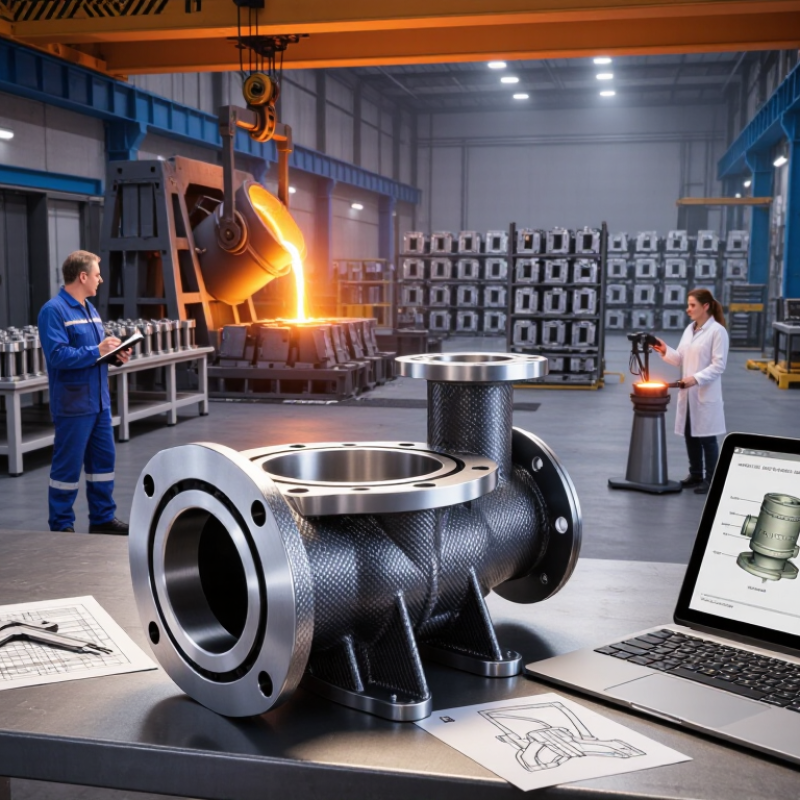
Carbon steel castings are made by pouring molten steel into a mold, where it takes the required shape. Their carbon content and heat treatment affect strength, hardness, and toughness. Higher carbon content can improve hardness, but may reduce ductility and make welding more demanding. The exact result depends on the full alloy composition and manufacturing process. Small details matter.
These castings suit parts that need strength and complex shapes, such as pump housings, valve bodies, machine frames, and heavy brackets. A pump housing may face pressure and vibration, while a frame may carry repeated loads. Match the casting’s properties to its working conditions, including temperature, impact, and expected service life. Carbon steel can rust in damp or corrosive environments, so coatings and maintenance may be necessary. There is no universal grade; choosing by strength alone can miss important risks.
Tips: Ask for verified chemical and mechanical test results, and confirm the specified heat treatment. Check whether the design allows practical inspection of critical areas. Review likely corrosion exposure before deciding on a protective finish. These checks help, though they cannot remove every uncertainty in service.
They are formed by pouring molten steel into a mold. Carbon content and heat treatment influence strength, hardness, and toughness. Small details matter.
They suit parts such as pump housings, valve bodies, machine frames, and heavy brackets. These parts may face pressure, vibration, or repeated loads.
Higher carbon content can increase hardness, but it may reduce ductility and complicate welding. The full alloy composition and manufacturing process also matter.
Yes. Damp or corrosive conditions can cause rust, so coatings and maintenance may be needed. The right finish depends on the actual environment.
Sand casting often suits larger parts, thick sections, and modest production runs. Cores can form internal cavities, but poor support may create uneven walls.
It may suit smaller parts with fine features and tighter dimensions. It can reduce machining, though pattern and tooling costs must fit the order size.
Confirm wall thickness, hole locations, finish needs, tolerances, and machining allowances with the foundry. A drawing alone may not show how metal fills thin sections.
Request verified chemical and mechanical test results, and confirm the specified heat treatment. Review corrosion exposure and inspect critical areas where practical. I would still double-check. A prototype helps, but it cannot reveal every production variation.
Choosing Carbon Steel Castings begins with understanding how the component will be used and what demands it must meet. Define the project’s operating conditions, expected loads, temperature range, exposure to wear or corrosion, and required service life. These factors help identify a suitable carbon steel grade, balancing strength, toughness, and performance in the intended environment rather than selecting a material based on a single property.
The casting process should also suit the part’s shape, dimensions, required finish, and production volume. Before making a final choice, review applicable quality standards, inspection methods, and testing requirements, such as checks for material properties and casting defects. Finally, assess whether the supplier can meet the project’s technical needs, maintain consistent production quality, and provide clear documentation. Considering material, process, quality, and supplier capability together helps ensure the casting is fit for purpose and practical to produce.

 Junlong