Choosing Cast Steel Parts is not simply a matter of selecting the strongest grade. The right choice depends on load, geometry, operating temperature, corrosion exposure, and the way the part will be made. A thick pump housing faces different demands from a compact valve body. Even small details, such as a sharp internal corner or a changing wall thickness, can affect filling, shrinkage, and inspection.
Casting researcher John Campbell’s published work offers a useful design principle. Put simply: “Design for sound metal before optimizing cost.” This is a paraphrase of his broader guidance, not a verbatim quotation. It points to a practical truth: material specifications cannot rescue a part whose design makes sound casting difficult.
This guide explains how to compare grades, review drawings, and discuss manufacturing limits with a supplier. It also covers strength, toughness, weldability, heat treatment, and testing, so the selection reflects real service conditions rather than a label alone. Ask for traceable material records and inspection details. Check the assumptions, too. Project data can be incomplete, and a neat specification may hide uncertainty about impact loads or corrosion. That deserves a second look. The goal is a dependable choice, made with evidence and clear trade-offs.
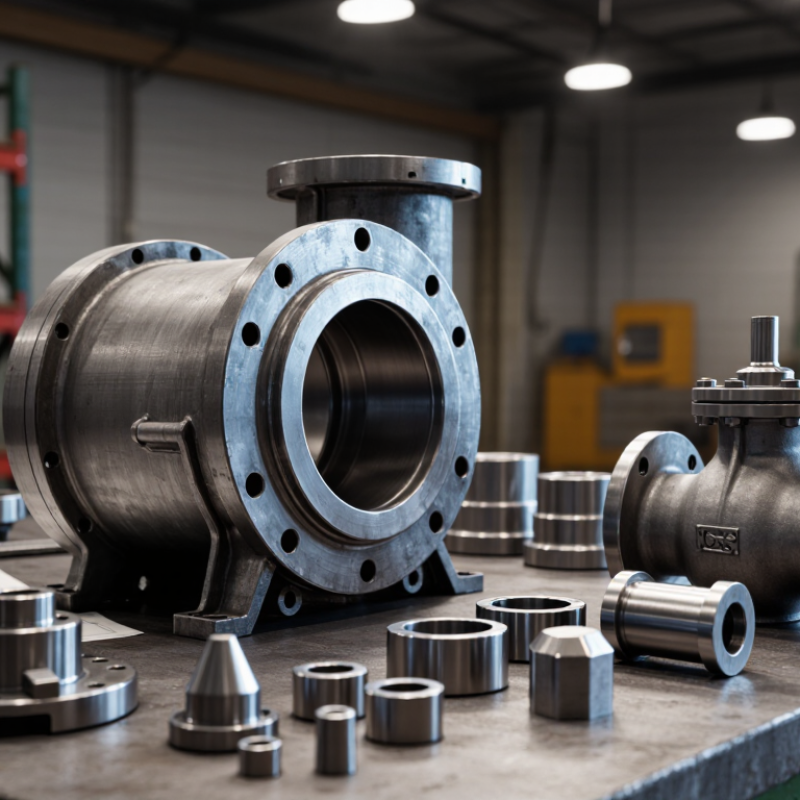
How to Choose the Right Cast Steel Parts for Your Project
Define the Project’s Performance and Operating Requirements
Start with the part’s actual working conditions, not just its drawing. Record static and impact loads, operating pressure, temperature range, and expected service life. Include startup and shutdown cycles; repeated heating can matter as much as peak temperature. Note exposure to moisture, chemicals, abrasive particles, or salt. Small details matter. A valve body outdoors may face cold starts, pressure surges, and corrosion at the same time.
Then compare these demands with verified material data and inspection requirements. ASTM A216/A216M lists Grade WCB cast steel with minimum tensile strength of 70 ksi (485 MPa) and minimum yield strength of 36 ksi (250 MPa). These figures are a starting point, not proof that a casting suits every load case. Confirm the applicable grade, heat treatment, impact-test needs, and foundry inspection plan with a qualified engineer. This step is easy to underestimate. I would also question whether the design’s stated “normal” temperature reflects real operating records.
Tips: Share load cases, temperature extremes, fluid conditions, and failure consequences with the supplier. Ask which test reports verify the casting’s properties, and check that the inspection plan covers critical sections.
| Requirement | Information to Define | Why It Matters | Selection and Verification Considerations |
|---|---|---|---|
| Service and duty cycle | Describe the part’s function, operating sequence, start-stop frequency, expected service life, and any periods of standby or overload. | Continuous, intermittent, and frequently cycled service can place different demands on the casting, even when peak loads are similar. | Define normal, peak, and transient operating conditions. Review the component’s design loads and expected duty cycle with the responsible engineer. |
| Pressure and containment | Specify working and design pressure, pressure-cycle frequency, test pressure, fluid state, and applicable pressure-vessel or piping code. | Pressure-containing castings require suitable material properties, casting quality, design rules, and inspection. Pressure alone does not establish suitability. | For pressure-retaining components, identify the governing code and material specification. ASTM A216 covers carbon-steel castings for high-temperature service; confirm the selected grade and design allowables against the applicable code and service conditions. |
| Operating temperature | Record minimum and maximum metal temperatures, normal operating temperature, temperature gradients, heating and cooling rates, and possible excursions. | Temperature affects strength, toughness, dimensional stability, and resistance to thermal cycling. The minimum temperature is especially important for brittle-fracture assessment. | Match the material specification and heat treatment to the full temperature range. ASTM A352 includes grades intended for low-temperature pressure service, while ASTM A217 includes alloy-steel grades for elevated-temperature service; grade selection and test requirements must be verified for the design. |
| Fluid and corrosion exposure | Identify the fluid or environment, chemical composition, concentration, contaminants, pH, moisture, velocity, and exposure duration. | Corrosion, erosion, or chemical attack can reduce wall thickness and shorten service life. A general carbon-steel grade is not suitable for every environment. | Assess corrosion and erosion mechanisms using service-specific data. Specify any corrosion allowance, coating, lining, or alternative alloy only after compatibility and maintenance requirements are reviewed. |
| Loads and mechanical stresses | Provide static and dynamic loads, bending and torsional forces, impact, vibration, support conditions, and any stress concentrations. | The casting must withstand the combined service loads, not just a single nominal load. Geometry and restraint can create local high-stress areas. | Use the applicable design method and material properties at service temperature. Review load cases, section transitions, fillets, and attachment points as part of the component design. |
| Fatigue and thermal cycling | Estimate the number and severity of pressure, mechanical, and temperature cycles over the expected service life. | Repeated stress changes can initiate and grow fatigue cracks, particularly at notches, abrupt section changes, or surface discontinuities. | Assess fatigue where cycling is significant. Define cycle counts and stress ranges, and consider geometry, surface condition, inspection access, and the required casting quality level. |
| Impact and toughness | State the lowest expected service temperature, potential impact events, and any required impact-test temperature and acceptance criteria. | Strength alone does not demonstrate resistance to brittle fracture. Toughness requirements depend on material, thickness, temperature, and governing rules. | Specify impact testing when required by the design code or service risk assessment. Confirm specimen type, test temperature, acceptance criteria, and material certification requirements before ordering. |
| Geometry and section thickness | Provide drawings, critical dimensions, minimum wall thickness, dimensional tolerances, machining allowances, and areas that are difficult to inspect. | Section changes and casting complexity affect solidification, feeding, dimensional control, and the likelihood of defects or distortion. | Review the design for castability with the foundry. Identify datum surfaces, critical interfaces, machining stock, and dimensional inspection methods on the drawing. |
| Welding and repair | Clarify whether the part will be welded, joined to other components, repaired after inspection, or exposed to post-weld heat treatment. | Weldability depends on material chemistry, section size, restraint, and service conditions. Welding can affect the heat-affected zone and residual stresses. | Specify permitted welding and repair procedures, qualification requirements, preheat or heat-treatment requirements, and inspection after repair. Obtain engineering approval before any repair welding. |
| Applicable specification and traceability | Identify the required material specification, grade, product form, governing code, revision, certification documents, and traceability level. | A material designation alone may not define all required mechanical properties, heat treatment, testing, or documentation. | State the complete specification and grade, including required supplementary requirements. Review the applicable edition and ensure the purchase documents match the design basis. |
| Inspection and acceptance | Define visual and dimensional inspection, pressure testing, nondestructive examination, sampling, acceptance criteria, and documentation. | Inspection methods detect different types of discontinuities; no single method finds every defect. Requirements should reflect component criticality and service risk. | Specify applicable methods such as radiographic, ultrasonic, magnetic-particle, or liquid-penetrant examination where appropriate. Set examination extent and acceptance criteria in the purchase specification. |
Material examples are general references, not a substitute for engineering review. Confirm the applicable specification, grade, code requirements, heat treatment, testing, and suitability for the actual service before selecting a casting.
Check yield strength, toughness, fatigue resistance, and tensile strength against actual loads. A compression bracket differs from a pressure-cycled valve body. Strength alone is not enough.
Low temperatures can increase the need for impact toughness, while prolonged heat may reduce strength. Moisture, chemicals, and abrasive particles also affect performance. Request material test reports and confirm heat treatment.
Yes. Thick sections may cool differently from thin edges, so properties can vary. Share drawings, load cases, and temperature ranges with the foundry. Catalog values are not guarantees.
Sand casting can suit larger parts with internal passages formed by cores. Investment casting may suit compact parts with thin ribs or fine details. Ask the foundry to confirm thin-section feasibility.
Mark datum surfaces and machining allowances clearly, especially near sealing faces. Shell molding may provide a smoother surface, but it cannot fix every dimensional issue. Check the first article’s fit.
Sand casting may keep tooling costs manageable for prototypes and modest runs. Repeat production may support dedicated tooling. Compare inspection, cleanup, machining, and scrap costs—not just the casting price.
Ask for heat traceability, chemistry results, tensile-test records, and furnace calibration logs. For a pump housing, request checks around flange faces and critical internal surfaces. Show me the records.
No. Review sample inspection reports, testing methods, and corrective-action records. Discuss suitable nondestructive testing for higher-risk parts. I would still hesitate if a supplier cannot clearly explain a failed test.
Choosing the right Cast Steel Parts starts with a clear understanding of the project’s performance and operating requirements. Consider the loads, temperatures, wear, corrosion exposure, and expected service life so the component can be matched to the demands of its application. Then select a cast steel grade that offers suitable strength and service characteristics, balancing performance needs with practical production considerations.
The part’s shape, dimensions, and level of detail can help determine which casting process is appropriate. When evaluating suppliers, review their production capabilities, inspection methods, and quality controls to confirm they can consistently meet specifications. Finally, compare more than the initial purchase price: assess lead time, finishing needs, maintenance expectations, and lifecycle performance. A thoughtful evaluation of these factors can help ensure the selected components are dependable, fit for purpose, and cost-effective over time.

 Junlong