Choosing the right Casting Alloy in 2026 requires more than comparing strength figures on a supplier’s datasheet. The decision begins with the component’s real working conditions: load cycles, operating temperature, corrosion exposure, wall thickness, and expected service life. A pump housing near seawater may need different protection than an automotive bracket facing vibration and road salt. These details often change the preferred alloy family.
Performance matters.
Experienced foundry engineers also examine fluidity, shrinkage, machinability, heat treatment, and casting defects. An alloy that fills a thin 3 mm section smoothly may create unacceptable porosity in a thicker design. Laboratory data provides direction, but production trials reveal practical risks. Request melt certificates, traceability records, chemical composition limits, and relevant mechanical test results. Independent testing can confirm tensile strength, hardness, and elongation after the chosen process.
No selection is perfect.
Cost can complicate the decision. A lower-priced alloy may require more machining, stricter temperature control, or additional inspection. A premium alloy may reduce failures but exceed the project’s budget. Engineers should compare total lifecycle cost, not only price per kilogram. They should also check current regional standards and customer requirements before approval.
Some published data is surprisingly inconsistent. That is a reason to verify, not a reason to guess. This guide explores how to balance performance, manufacturability, sustainability, availability, and risk when selecting a Casting Alloy for modern applications. The best choice is usually the one supported by evidence, controlled trials, and honest review of what went wrong.
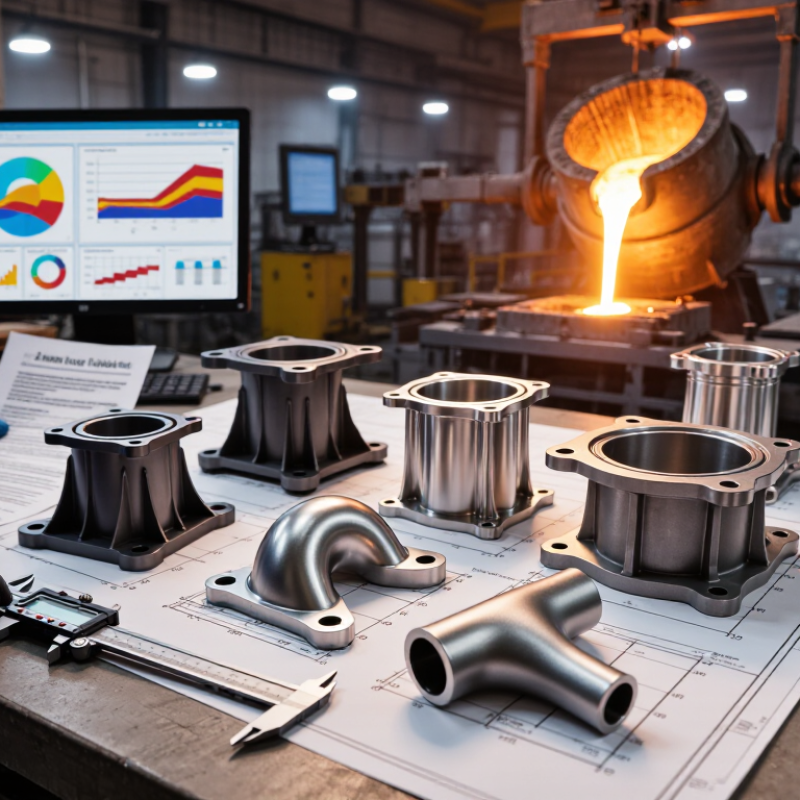
How to Choose the Right Casting Alloy in 2026?
Define Casting Alloy Requirements by Application and Service Conditions
Start with the service. A pump housing, brake component, and food-processing valve face different risks. Write down the working temperature, pressure, load cycles, fluid exposure, and expected service life. Include cleaning chemicals and outdoor moisture. Small details matter.
In foundry evaluations, alloy selection often begins with failure analysis rather than price. A wear-resistant alloy may survive abrasive particles but crack under repeated impact. A corrosion-resistant grade may perform well in a wet environment yet lose strength at elevated temperatures. Check tensile strength, hardness, elongation, fatigue behavior, and thermal expansion against real operating conditions. Section thickness also matters because cooling rates can change the final structure.
Casting method and post-processing deserve equal attention. Sand, investment, and die casting impose different limits on fluidity, shrinkage, porosity, and dimensional accuracy. Ask whether heat treatment is practical for the finished geometry. Complex cavities may trap defects that a basic visual inspection misses. Use representative samples, not only laboratory coupons. Test them after machining and any coating process.
A lower-cost alloy can appear efficient on paper. It may create higher inspection, repair, or replacement costs later. I have seen teams choose strength first, then discover poor corrosion performance near a gasket joint. That choice was understandable, but incomplete. Review the alloy with design, casting, quality, and maintenance engineers before releasing the specification. Record the reasoning, test conditions, and acceptable failure limits. Revisit them when the application changes.
| Alloy Family | Representative Standard Designation | Typical Applications | Key Service Conditions | Typical Mechanical or Physical Profile | Why Choose It | Main Limitations | Selection Priority |
|---|---|---|---|---|---|---|---|
| Gray Cast Iron | EN-GJL-250 ASTM A48 Class 40 |
Machine bases, brake rotors, housings, pump bodies and flywheels. | Moderate temperatures; compressive loading; vibration and noise control; limited impact. | Tensile strength is typically about 250 MPa for EN-GJL-250. Excellent damping, thermal conductivity and machinability. | Low material cost, good castability, strong vibration damping and stable machining performance. | Low ductility and poor impact resistance. Not suitable for severe shock, high tensile stress or pressure-critical sections without validation. | Prioritize vibration damping, compressive strength, machinability and cost. |
| Ductile Iron | EN-GJS-400-15 ASTM A536 60-40-18 |
Automotive suspension parts, pipe fittings, gears, brackets and pressure-containing castings. | Static and cyclic loads with moderate impact; normal atmospheric, water or mildly corrosive environments. | Typical minimum tensile strength is about 400 MPa with approximately 15% elongation for EN-GJS-400-15. Better toughness than gray iron. | Good strength-to-cost ratio, useful ductility, fatigue capability and comparatively good castability. | Performance depends strongly on nodularity, section size, matrix structure and heat treatment. Corrosion protection may still be needed. | Prioritize tensile load, fatigue, impact resistance, section thickness and nodular graphite quality. |
| Carbon Steel Casting | ASTM A216 WCB EN 10213 GP240GH |
Valves, pump bodies, flanges and pressure equipment in general industrial service. | Moderate-to-high pressure; liquid or gas containment; temperatures commonly below approximately 425°C, subject to code limits. | Weldable ferritic steel with high strength and useful toughness when properly processed and heat treated. | Suitable for pressure-retaining sections, repair welding and broad industrial operating conditions. | Lower corrosion and high-temperature resistance than stainless or alloy steels. Brittle-fracture risk must be assessed at low temperatures. | Prioritize pressure class, toughness, weldability, wall thickness, temperature and applicable pressure-vessel code. |
| Low-Alloy Cr-Mo Steel | ASTM A217 WC6 / WC9 EN 10213 G17CrMo5-5 |
Steam valves, boiler components, refinery equipment and high-temperature pressure parts. | Elevated temperature and pressure; cyclic thermal service; steam, hydrocarbon and process-fluid exposure. | Higher creep strength and oxidation resistance than plain carbon steel. Typical use extends into the approximately 500–600°C range depending on grade and code. | Improved elevated-temperature strength, thermal-fatigue resistance and pressure-retaining capability. | Requires controlled heat treatment, welding procedures and post-weld heat treatment where specified. Not a universal solution for aggressive corrosion. | Prioritize creep strength, thermal cycling, weld procedure qualification and code compliance. |
| Heat-Resistant Stainless Steel | ASTM A351 HK 25Cr-20Ni Austenitic Grade |
Furnace components, radiant tubes, heat-treatment fixtures and high-temperature manifolds. | Oxidizing atmospheres and continuous high-temperature exposure, commonly approaching 800–1,000°C depending on atmosphere and design. | Strong oxidation resistance and good retention of structural integrity at high temperature; low magnetic response in the solution-annealed condition. | Useful for hot gas exposure where carbon or low-alloy steels would rapidly oxidize or lose strength. | High alloy cost, relatively high thermal expansion, reduced room-temperature ductility after prolonged exposure and possible carbide-related embrittlement. | Prioritize atmosphere chemistry, temperature profile, thermal expansion, creep and oxidation resistance. |
| Al-Si Casting Alloy | A356-T6 EN AC-42100 |
Lightweight structural housings, wheels, suspension components, pump bodies and aerospace or transport castings. | Weight-sensitive applications; dry or mildly corrosive environments; service temperatures generally below approximately 200°C for strength-critical designs. | Density is approximately 2.65 g/cm³. T6 treatment provides higher strength than the as-cast condition; good corrosion resistance and weldability relative to many cast alloys. | Excellent strength-to-weight ratio, good fluidity and a well-established heat-treatment route. | Strength decreases significantly at elevated temperature. Porosity, hot tearing and heat-treatment distortion must be controlled. | Prioritize mass reduction, fatigue strength, pressure tightness, heat treatment and non-destructive inspection. |
| Al-Si-Cu Casting Alloy | 319-Type Aluminum Alloy EN AC-45000 Family |
Engine components, transmission housings, structural brackets and general-purpose automotive castings. | Moderate temperature; complex shapes; dry, lubricated or mildly corrosive service; useful where castability is more important than maximum ductility. | Good fluidity, machinability and dimensional stability. Copper additions increase strength but generally reduce corrosion resistance and ductility. | Reliable filling of complex geometries and a practical balance of strength, cost and production efficiency. | Lower corrosion resistance and ductility than many low-copper Al-Si alloys. Heat treatment and porosity control affect fatigue performance. | Prioritize geometry complexity, production volume, machinability, strength and corrosion exposure. |
| Aluminum Bronze | C95800 CuAl10Fe5Ni5 Type |
Marine pumps, valves, propellers, seawater fittings and wear-resistant components. | Seawater, brackish water, cavitation, erosion and sliding or abrasive contact; moderate-to-high mechanical loading. | High strength, good resistance to seawater corrosion and cavitation, and useful wear resistance. Density is approximately 7.5–8.0 g/cm³. | Strong choice for marine service where copper alloys must withstand erosion, cavitation and mechanical loading. | Higher cost and density than aluminum alloys. Casting defects and phase balance can significantly affect toughness and corrosion performance. | Prioritize seawater chemistry, cavitation, erosion, galvanic compatibility and bearing or wear behavior. |
| Nickel-Aluminum Bronze | C95810 CuAl9Ni5Fe4 Type |
Marine propellers, pump impellers, valve bodies and heavy-duty seawater hardware. | High-velocity seawater, cavitation, erosion, cyclic loading and marine biofouling exposure. | High tensile strength and excellent resistance to seawater corrosion, erosion and cavitation when correctly cast and heat treated. | Combines mechanical strength with strong marine durability and good resistance to localized attack. | Requires careful control of cooling rate, phase structure and welding or repair procedures. Galvanic interaction with dissimilar metals must be evaluated. | Prioritize cavitation resistance, propeller loading, seawater velocity, galvanic design and repairability. |
| High-Chromium White Iron | ASTM A532 Class III Type A 約 25% Cr Grade |
Mining pump liners, slurry pipelines, shot-blast equipment and abrasive material-handling parts. | Severe abrasion from sand, ore, mineral slurry or high-velocity solid particles; generally limited impact. | Very high abrasion resistance from a hard chromium-carbide matrix. Hardness is commonly around 600–750 HBW depending on grade and heat treatment. | Long service life in abrasive environments where ductile metals wear rapidly. | Low fracture toughness and limited weldability. Unsuitable for heavy impact, high shock or significant tensile loading. | Prioritize abrasive particle size, hardness, impact level, slurry velocity and replacement strategy. |
| Nickel-Base Casting Alloy | ASTM A494 CW-6M Ni-Cr-Mo Corrosion-Resistant Grade |
Chemical-process pumps, valves, impellers and components exposed to reducing or mixed corrosive media. | Strong acids, chlorides, wet-process chemicals and elevated temperatures where stainless steel may suffer localized corrosion. | High corrosion resistance and useful strength over a wide temperature range; density is typically about 8.5–9.0 g/cm³. | Suitable for demanding chemical environments requiring resistance to pitting, crevice corrosion and certain reducing acids. | High material and machining cost; casting quality, weld repair and heat treatment require close control. | Prioritize chemical composition, chloride level, pH, temperature, corrosion rate and life-cycle cost. |
Typical values are comparative guidance rather than design allowables. Final alloy selection should be confirmed against the applicable ASTM, EN, ISO or pressure-equipment code, including casting quality, heat treatment, section size, corrosion testing, fatigue analysis and non-destructive inspection requirements.
Record temperature, pressure, load cycles, fluids, cleaning chemicals, moisture, and expected service life. Small details matter. A pump housing and a food-processing valve may need different alloy properties.
Compare tensile strength, hardness, elongation, fatigue behavior, corrosion resistance, and thermal expansion. Do not choose strength alone. A strong alloy may crack under repeated impact or weaken in hot, wet conditions.
Different wall thicknesses cool at different rates. This can change the final metal structure and defect risk. Thin sections and heavy corners should be reviewed separately.
Sand, investment, and die casting create different limits for fluidity, shrinkage, porosity, and accuracy. The alloy must suit the selected process. A complex cavity may hide defects.
Request production-representative samples, not only laboratory coupons. Review strength, hardness, fatigue, elongation, and porosity results. Test samples after machining and coating when those steps affect the finished part.
Not always. A cheaper alloy may increase inspection, repair, or replacement costs. That judgment can be incomplete. Check the full service cost, especially near gasket joints and exposed surfaces.
Request traceability, furnace calibration records, composition checks, inspection results, and corrective-action history. Certificates should identify the melt, casting location, heat treatment, and test method. One attractive certificate proves little.
Include design, casting, quality, and maintenance engineers in the review. Run a pilot lot and compare it with serial production. Record test conditions, deviations, and acceptable failure limits. Recheck assumptions.
Choosing the right Casting Alloy in 2026 begins with a clear understanding of the application and service environment. Factors such as load, temperature, wear, corrosion exposure, dimensional stability, and expected operating life should guide the initial selection. Different alloy families offer distinct advantages in strength, corrosion resistance, heat performance, machinability, and weight, so the best option depends on the balance of properties required rather than a single performance target.
The casting process and part geometry must also be considered, since wall thickness, complexity, surface requirements, and production volume affect alloy compatibility and manufacturing efficiency. A practical decision should include material pricing, energy use, tooling, machining, inspection, repair, and long-term maintenance costs. Before final approval, buyers should verify applicable standards, review mechanical and chemical testing data, assess traceability, and confirm the supplier’s quality-control capabilities. A systematic evaluation helps ensure reliable performance, consistent production, and a better total value throughout the component’s service life.

 Junlong