In today's advanced manufacturing landscape, Precision Castings play a crucial role in various industries, including aerospace and automotive. According to a recent report by MarketsandMarkets, the global precision casting market is expected to reach USD 28.98 billion by 2026, reflecting a steady growth rate. This trend highlights the increasing demand for high-quality, intricate components.
Manufacturers are constantly seeking the top sources for precision castings to ensure product reliability. Specific industries require stringent quality standards, making it vital to choose suppliers with proven expertise. Companies often face challenges in sourcing reliable partners. Some suppliers may not meet the required certifications, which can lead to complications down the line.
Utilizing reputable sources for precision castings can enhance efficiency and product performance. Industry leaders emphasize the importance of transparency in the casting process. It's important to evaluate supplier capabilities and past work thoroughly. Careful consideration can prevent costly mistakes in the manufacturing process. While the market is full of options, due diligence is essential for success in precision casting ventures.
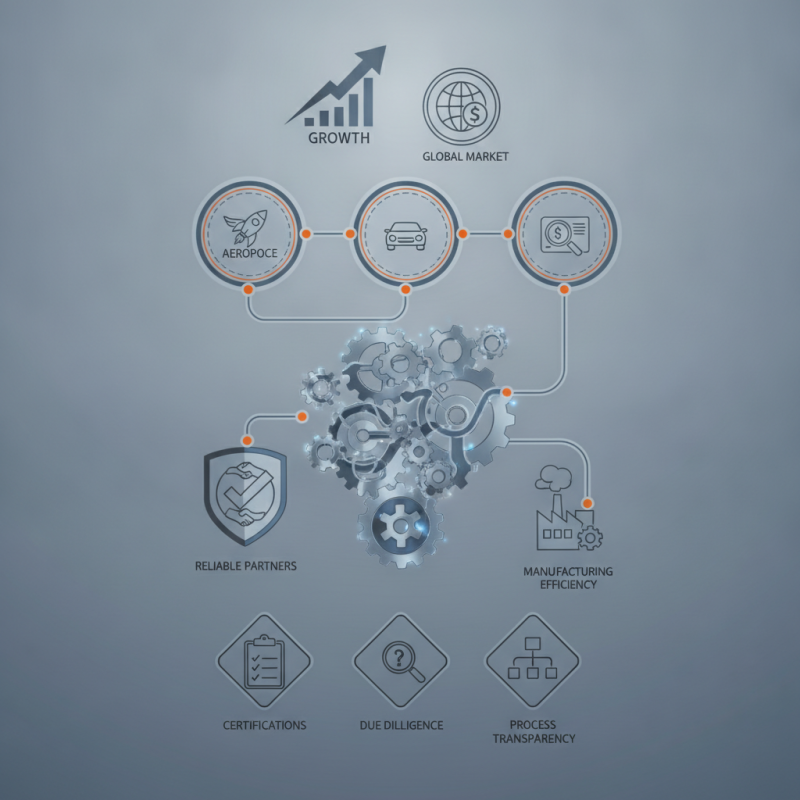
Precision casting is a versatile manufacturing process. It allows for the creation of intricate metal parts with high dimensional accuracy. This technique is widely used across various industries, including aerospace, automotive, and medical fields. The ability to produce complex shapes reduces the need for extensive machining. This can save both time and resources.
The applications of precision casting are vast. In the aerospace sector, it contributes to the production of engine components that meet stringent weight and strength criteria. In medical devices, precise castings are essential for creating reliable instruments. However, not all casting processes are perfect. Issues such as porosity or dimensional inaccuracies can arise. Continuous refinement is necessary to address these problems and improve outcomes.
Quality control is crucial in precision casting. Manufacturers must adhere to strict standards to ensure reliability. Testing methods include X-ray inspections and surface roughness assessments. Maintaining high quality throughout the casting process can be challenging. It requires expertise and thorough knowledge of materials and processes. This ongoing pursuit of excellence is what drives the industry forward.
Precision casting relies on specific materials that ensure quality and durability. The most common materials include aluminum, steel, and iron. Each serves a unique purpose. Aluminum offers excellent fluidity and corrosion resistance. It is ideal for lightweight applications. Steel, on the other hand, is known for its strength. It is frequently used in heavy-duty machinery industries. Iron, specifically grey cast iron, provides good wear resistance and machinability, making it suitable for automotive components.
According to a report by MarketsandMarkets, the global precision casting market is expected to grow substantially. Key industries driving this growth are automotive, aerospace, and medical equipment. Each industry demands stringent quality standards. This reality challenges manufacturers to choose the right materials meticulously. A 2021 study indicated that more than 40% of defects in castings originate from material selection errors. This statistic emphasizes the importance of careful consideration in the material selection process.
Prototypes often test weaknesses before full-scale production. However, failures can lead to expensive revisions. A transparent understanding of material properties can mitigate these risks. Ensuring that every step is scrutinized can improve overall outcomes. Continuous learning and adaptation are essential to mastering precision casting processes. The evolution of technology also reshapes material selection. This dynamic nature adds complexity to an already challenging field.
| Material Type | Common Applications | Advantages | Limitations |
|---|---|---|---|
| Aluminum Alloys | Automotive, Aerospace, Consumer Electronics | Lightweight, High strength-to-weight ratio, Corrosion resistant | Lower thermal conductivity than certain metals |
| Stainless Steel | Medical Devices, Food Processing, Oil and Gas | Corrosion resistant, Durable, Excellent mechanical properties | Higher cost compared to carbon steel |
| Ductile Iron | Pipes, Automotive Components, Heavy Machinery | High tensile strength, Good machinability, Cost-effective | Limited resistance to oxidation at high temperatures |
| Bronze Alloys | Marine Applications, Bearings, Electrical Connectors | Excellent corrosion resistance, Good wear properties | More expensive than iron or steel |
| Carbon Steel | Construction, Machinery, Automotive | High strength, Versatile, Readily available | Prone to rusting and corrosion without protective coatings |
When exploring the world of precision castings, it is essential to recognize key players in this specialized field. Companies focusing on precision castings utilize advanced techniques and materials to create high-quality components. These components serve various industries, such as automotive, aerospace, and medical devices. Precision in casting processes can often spell the difference between success and failure in product performance.
Many companies have cultivated a wealth of experience and expertise. They employ engineers armed with specialized knowledge to ensure accuracy in every casting. Some utilize cutting-edge technology like 3D printing for molds. Others optimize traditional methods to enhance efficiency. However, even experienced firms face challenges. Sometimes, the need for rapid prototyping can clash with quality assurance. Companies often need to reflect on their capacity to balance speed and precision efficiently.
With the demand for precision castings on the rise, reliability becomes crucial. Buyers look for suppliers with a solid track record. This includes the ability to meet and maintain consistent quality. Trust and transparency are vital as well. Companies must demonstrate their reliability through certifications and quality control measures. In the realm of precision castings, establishing a reputation for excellence is a continuous journey filled with learning and adaptation.
Precision casting has seen significant advancements in recent years. New technologies are shaping the way components are designed and produced. Additive manufacturing plays a crucial role. It allows for complex geometries that were previously impossible. This innovation reduces waste and enhances precision.
Another fascinating trend is the use of advanced materials. High-performance alloys and composites provide better strength and thermal resistance. These materials often outperform traditional options. However, the challenge lies in the cost and sourcing. Not all manufacturers can access these high-quality materials easily.
Automation in the casting process is also noteworthy. Robotics streamline operations, allowing for faster production cycles. While automation offers efficiency, it raises questions about workforce skills. The industry must adapt to these changes. Investing in training is essential to bridge the skill gap. The future of precision casting is bright, but it necessitates continuous learning and adaptation.
Choosing the right precision casting supplier requires careful consideration. Precision castings are essential in industries like aerospace and automotive, where tolerances are tight. According to industry reports, up to 70% of casting defects arise from poor supplier selection and management.
One crucial factor is the supplier's experience. Look for companies with a proven track record in your specific application. Experience matters, especially in high-stakes scenarios. A technical paper by the American Foundry Society highlights that suppliers with over ten years in the field often yield fewer defects and better quality control.
You should also evaluate the supplier’s technology and capabilities. Advanced techniques, such as computer-aided design (CAD) and simulation software, significantly enhance precision. However, not all suppliers invest in high-tech solutions. This can lead to inconsistencies in product quality. Always ask about the methods they use and any recent investments in technology.
Additionally, consider the supplier's commitment to sustainability. The foundry industry faces increasing scrutiny regarding its environmental impact. Suppliers focused on eco-friendly practices often achieve better reputations and operational efficiency, contributing to long-term partnerships.
: Common materials include aluminum, steel, and iron. Each serves a unique purpose in casting.
Over 40% of casting defects come from material selection errors. Careful choice ensures better quality.
Companies focus on certifications, quality control, and maintaining a solid track record for consistency.
Balancing speed and accuracy can be difficult, especially with the need for rapid prototyping.
Advanced tools like 3D printing and CAD enhance accuracy but may introduce new complexities if not managed well.
Consider their experience, technology use, and commitment to sustainability for better quality and reliability.
Yes, suppliers with over ten years of experience often yield fewer defects and better quality control.
Absolutely, suppliers focusing on eco-friendly practices often build better reputations and long-term partnerships.
Prototypes help identify weaknesses, but failures can lead to costly revisions.
Adapting to evolving technology and processes is crucial for mastering precision casting techniques and improving outcomes.
Precision castings, a highly accurate manufacturing process, have a significant impact across various industries, including automotive, aerospace, and medical applications. This process utilizes specific materials such as metals and alloys that ensure durability and precision in the final product. The development of advanced techniques and technologies continues to shape the landscape of precision casting, enabling improved efficiency and quality in production.
When selecting a supplier for precision castings, it is crucial to evaluate factors such as material expertise, production capabilities, and innovation in casting technologies. A well-rounded approach to choosing a partner in precision casting not only helps in achieving high-quality results but also ensures the reliability and effectiveness of the components produced. Understanding these key aspects is essential for businesses looking to leverage precision castings in their manufacturing processes.

Junlong