Carbon Steel Cast Parts remain essential in demanding industries because they combine strength, machinability, and practical cost control. Their performance depends on more than carbon content. Casting method, heat treatment, wall thickness, cooling speed, and service conditions also matter. A thick pump body may cool slowly, while a thin valve section can harden faster. That difference affects toughness and dimensional stability.
This introduction examines the top types of Carbon Steel Cast Parts, including low-carbon, medium-carbon, and high-carbon grades. Each group offers a different balance of weldability, hardness, wear resistance, and impact strength. Low-carbon castings suit housings and structural components. Medium-carbon castings support gears, brackets, and heavily loaded machine parts. High-carbon options may resist wear, but they often sacrifice ductility and require stricter process control.
As casting expert John Campbell wrote, “The quality of a casting is determined by the quality of the liquid metal.” His statement remains practical today. Clean steel, controlled pouring, effective risering, and careful inspection can prevent costly defects. These details matter.
Still, this classification is not perfect. Carbon percentage alone cannot predict field performance. An alloy with excellent hardness may fail under repeated impact. A tougher grade may wear too quickly in abrasive service. Engineers must review drawings, load data, temperature, corrosion exposure, and applicable standards before selecting a part. The following outline compares these carbon steel casting types through real applications, manufacturing considerations, and common limitations. It also questions assumptions that seem reasonable but may produce unreliable results.
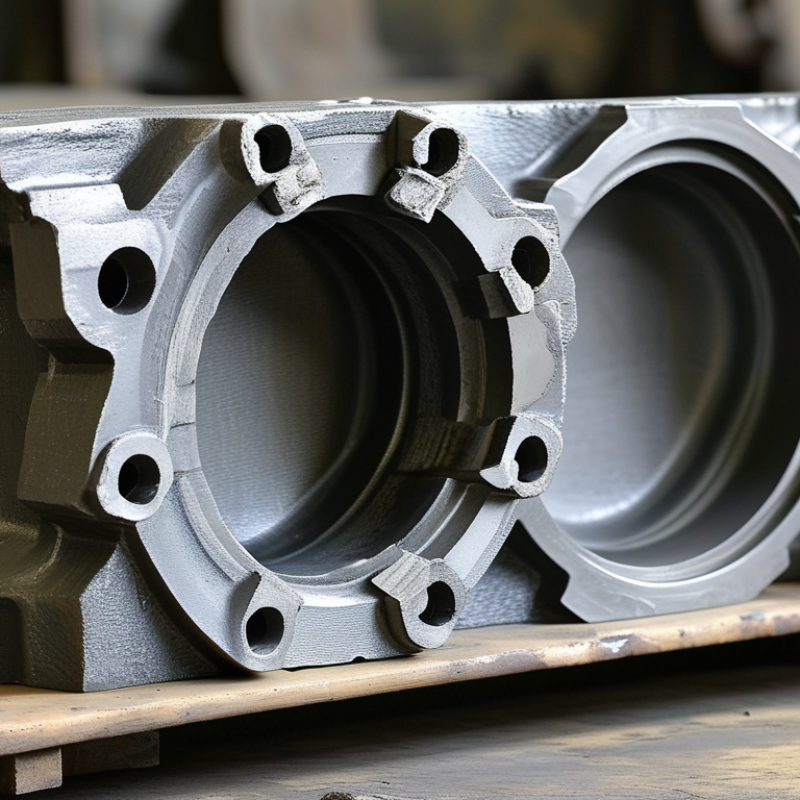
Carbon steel cast parts are metal components formed by pouring molten carbon steel into a mold. Their carbon content mainly distinguishes low-, medium-, and high-carbon grades. Low-carbon steel, usually below 0.25% carbon, offers better weldability and toughness. Medium-carbon steel, roughly 0.25% to 0.60%, balances strength and machinability. High-carbon steel exceeds about 0.60% and provides greater hardness, although it can become less forgiving during welding. These ranges may vary between standards.
Another classification method focuses on the casting process. Sand casting suits large pump bodies, valve housings, and industrial frames. Investment casting produces smaller parts with intricate passages and tighter dimensions. Centrifugal casting is used for selected cylindrical components, where controlled solidification matters. The choice depends on geometry, production volume, surface requirements, and post-casting machining. AFS technical publications repeatedly identify sand casting as a major route for ferrous components, but process shares differ by region and application.
Engineers also classify carbon steel cast parts by function: structural supports, pressure-retaining bodies, wear-resistant components, and transmission parts. Common examples include brackets, gears, impellers, railway fittings, and flanges. The World Steel Association reported approximately 1.84 billion tonnes of crude steel production in 2024, showing the enormous scale of steel supply behind these applications. Yet volume alone proves little. USGS mineral data also links steel production to massive iron-ore consumption, but material availability does not guarantee casting quality. In practice, chemistry, heat treatment, shrinkage control, and inspection decide performance. The categories overlap. That is worth remembering.
Structural carbon steel castings are widely used for frames, housings, and supports that carry steady or changing loads. Their main advantage is dependable strength with practical weldability and machining performance. Common examples include machine frames, pump housings, bearing supports, base plates, and connection nodes.
Geometry matters. Frames need cast sections that guide forces toward joints without creating sharp stress concentrations. Rounded transitions, balanced wall thickness, and carefully placed ribs can reduce distortion and cracking risks. Housings also benefit from solid mounting bosses and accurately machined faces. These details help protect shafts, bearings, and internal components during operation.
Support castings require equal attention to load direction and foundation contact. A broad base can reduce local pressure, while reinforced corners can improve stiffness. However, heavier sections are not automatically safer. Thick metal cools slowly and may produce shrinkage defects or uneven properties. Designers should review casting flow, machining allowances, heat treatment, and inspection requirements before production. Non-destructive testing may be suitable for critical areas, but it cannot replace sound design. A casting can pass inspection and still perform poorly if loads were estimated incorrectly. Real service conditions deserve honest review, especially vibration, temperature changes, and repeated impact.
| Carbon Steel Cast Part Type | Primary Structural Function | Typical Applications | Common Design Features | Principal Loads | Common Material Specifications | Key Quality Considerations |
|---|---|---|---|---|---|---|
| Machine Frames and Base Frames | Provide a rigid foundation for equipment, assemblies, and mounted components. | Industrial machinery, pumps, compressors, conveyors, material-handling systems, and processing equipment. | Large base pads, mounting bosses, stiffening ribs, machined datum surfaces, and integrated anchor-bolt locations. | Compression, bending, vibration, bolt preload, and localized bearing loads. | ASTM A27/A27M ASTM A148/A148M EN 10293 | Control of distortion, soundness around mounting pads, dimensional stability, and adequate machining allowance. |
| Equipment Housings and Casings | Enclose and protect internal components while maintaining alignment between shafts, bearings, or connected parts. | Gearboxes, pumps, reducers, compressors, valve assemblies, and general industrial equipment. | Flanged joints, bearing seats, inspection covers, internal ribs, lifting lugs, and cast-in passages. | Internal pressure, bolt loads, shaft-reaction forces, vibration, and thermal stresses. | ASTM A216/A216M ASTM A27/A27M EN 10293 | Leak-tightness where required, freedom from shrinkage cavities, accurate bore alignment, and controlled wall transitions. |
| Structural Brackets and Mounting Supports | Transfer equipment or piping loads into a frame, foundation, wall, or support structure. | Motor mounts, pipe supports, actuator brackets, machinery attachments, and industrial skids. | Gussets, fillets, slotted or drilled mounting holes, load-bearing pads, and reinforced corners. | Shear, tension, bending, bolt-group loads, and fatigue caused by vibration. | ASTM A27/A27M ASTM A148/A148M EN 10293 | Radiused transitions, avoidance of abrupt section changes, dimensional accuracy at bolt holes, and surface inspection for cracks. |
| Bearing Housings and Pedestals | Support bearings and preserve the centerline and alignment of rotating equipment. | Fans, pumps, conveyors, gear drives, crushers, and rotating process machinery. | Precision-machined bearing bores, split lines, webbed walls, lubrication ports, and anchor feet. | Radial loads, axial loads, overturning moments, vibration, and thermal expansion effects. | ASTM A216/A216M ASTM A27/A27M | Bore concentricity, machining allowance, dimensional repeatability, and absence of internal defects near bearing seats. |
| Pipe and Duct Support Castings | Carry static and dynamic loads from piping, ducts, and connected equipment. | Process plants, utility systems, water-treatment equipment, exhaust systems, and industrial skids. | U-shaped saddles, clevises, lugs, base plates, guide surfaces, and integrated reinforcement ribs. | Vertical weight, thermal expansion, seismic or vibration loads, friction, and occasional impact. | ASTM A27/A27M ASTM A148/A148M EN 10293 | Correct support geometry, smooth load paths, suitable corrosion protection, and verification of critical dimensions. |
| Flanged Structural Adapters | Connect equipment, piping, or structural members while transferring loads across a bolted interface. | Pump connections, valve assemblies, duct transitions, drive systems, and modular equipment frames. | Raised or flat flanges, bolt circles, hubs, alignment shoulders, and reinforcing webs. | Flange bending, bolt preload, pressure thrust, torsion, and shear. | ASTM A216/A216M ASTM A27/A27M | Flatness, bolt-hole position, flange-face finish, dimensional control, and inspection of hub-to-flange junctions. |
| Lifting Lugs and Handling Attachments | Enable safe lifting, positioning, and installation of heavy frames, housings, or support assemblies. | Industrial equipment, fabricated skids, pump packages, machinery modules, and maintenance assemblies. | Thickened lug sections, radiused holes, gussets, reinforced bases, and clearly defined load paths. | Tension, shear, out-of-plane bending, impact, and fatigue during repeated handling. | ASTM A27/A27M ASTM A148/A148M | Traceable material, careful radii, dimensional inspection of holes, surface examination, and engineering verification of rated loads. |
| Foundation Plates and Anchor Blocks | Distribute equipment loads and secure assemblies to concrete foundations or structural steelwork. | Motors, pumps, compressors, generators, conveyors, and heavy processing equipment. | Anchor pockets, leveling pads, bolt holes, shear keys, grout interfaces, and stiffening ribs. | Compression, shear, overturning, anchor tension, vibration, and installation loads. | ASTM A27/A27M ASTM A148/A148M EN 10293 | Flatness, planarity, machining reference surfaces, shrinkage control, and compatibility with grout and anchor systems. |
| Crossmembers and Reinforcing Nodes | Join structural members and improve stiffness, load distribution, and resistance to frame deformation. | Vehicle and trailer structures, industrial frames, access platforms, conveyors, and modular support systems. | Multi-directional connection faces, ribbed geometry, gusseted junctions, and integrated bolt or weld-preparation areas. | Combined bending, torsion, axial load, shear, and fatigue. | ASTM A27/A27M ASTM A148/A148M EN 10293 | Uniform solidification, smooth section transitions, avoidance of hot spots, and non-destructive examination of highly stressed zones. |
Material specifications shown are commonly associated with carbon steel castings and should be selected according to design loads, temperature, pressure, weldability, corrosion conditions, applicable codes, and required inspection level. Mechanical properties and heat-treatment requirements vary by grade and specification.
Wear-resistant carbon steel castings support crushers, conveyors, excavators, pumps, and bulk-handling systems. Common parts include jaw plates, bucket teeth, crusher liners, rollers, sprockets, and impact housings. Their value comes from practical durability, not simply high hardness.
The World Steel Association reported approximately 1.89 billion tonnes of crude steel production in 2023. This scale supports a mature supply chain for carbon steel casting, machining, and heat treatment. USGS Mineral Commodity Summaries 2024 also identified steel as a major industrial material worldwide. Demand remains strong where equipment faces repeated impact, abrasion, and heavy loads.
Material selection needs closer attention. Medium-carbon steel castings can provide a useful balance between toughness and wear resistance after normalizing or quenching and tempering. Low-carbon grades are easier to weld but may wear faster. High-carbon grades can resist abrasion better, yet they may crack under sudden impact.
Field inspections often reveal the same problem: hardness was specified, but the actual wear mechanism was misunderstood. A crusher liner facing sharp rock needs a different response from a bucket tooth striking compacted soil.
ASTM A216/A216M offers a recognized framework for carbon steel pressure-retaining castings, although wear parts often require additional project specifications. Small details matter, including section thickness, heat-treatment records, dimensional checks, and surface defects. Nothing is perfect. A harder casting can still fail early when impact loading dominates.
Pressure-retaining carbon steel cast parts form the working shell of many valves and pumps. Common examples include valve bodies, bonnets, pump casings, covers, and flanged end sections. These components must contain pressurized water, oil, steam, or process fluids without cracking or leaking. Their design depends on pressure, temperature, fluid chemistry, wall thickness, and connection loads.
A reliable casting starts with controlled steel chemistry and a stable mold-filling process. Engineers inspect critical areas for shrinkage, gas pores, inclusions, and uneven sections. Hydrostatic testing can reveal leakage that visual inspection misses. Radiographic or ultrasonic examination may support quality checks, especially around flanges, corners, and thick hubs. Machined sealing faces need accurate alignment. A small mismatch can cause trouble during installation. Applicable material and pressure standards should guide the design, testing, and traceability records. In practice, no casting is perfect. The difficult part is deciding which imperfections are acceptable, and that decision needs documented engineering judgment.
Selecting the right carbon steel cast part begins with service conditions, not shape. A pump body, valve housing, and lifting hook may look similar, yet their risks differ sharply. World Steel Association data reports approximately 1.88 billion tonnes of crude steel production in 2024, showing the material’s industrial importance. Volume alone, however, does not prove suitability.
For pressure-containing parts, engineers often review ASTM A216/A216M grades, such as WCB, against operating temperature, pressure, and inspection requirements. General structural castings may fit ASTM A27/A27M, but grade selection still depends on impact loading and section thickness. Higher carbon content can improve hardness and strength. It can also reduce weldability. That trade-off is easy to underestimate.
Start with the load path. Choose a wear-resistant grade for sliding contact, a tougher grade for shock, and a weld-friendly chemistry for repair or fabrication. Check casting drawings for thick corners, shrinkage risks, and machining allowance. Require radiographic or ultrasonic testing when hidden defects could cause serious failure. The American Foundry Society’s technical guidance repeatedly emphasizes process control, defect prevention, and inspection in reliable castings. Corrosion exposure deserves equal attention; ordinary carbon steel may need coating, a corrosion allowance, or another alloy. Sometimes the cheapest casting becomes expensive after installation. Recheck the assumptions. Forecast loads are rarely perfect.
: They are metal components made by pouring molten carbon steel into a prepared mold. The final shape may need machining, heat treatment, or inspection.
Low-carbon steel usually contains less than 0.25% carbon. Medium-carbon steel contains about 0.25% to 0.60%. High-carbon steel contains more than about 0.60%. These ranges can vary between standards.
Sand casting suits large pump bodies, valve housings, and industrial frames. Investment casting suits smaller parts with complex passages and tight dimensions. Centrifugal casting suits selected cylindrical components. The best process depends on shape, quantity, surface needs, and machining.
They can serve as structural supports, pressure-retaining bodies, wear parts, or transmission components. Typical examples include brackets, gears, impellers, railway fittings, and flanges. The categories can overlap.
They offer useful strength, machinability, and practical weldability. Rounded transitions can reduce stress concentration. Balanced walls may limit distortion and cracking. Mounting bosses and machined faces help protect internal components.
Not always. Thick metal cools slowly and may develop shrinkage defects or uneven properties. Designers should review metal flow, machining allowances, heat treatment, and inspection needs. A heavy section is not automatically a stronger solution.
Common parts include crusher liners, jaw plates, bucket teeth, rollers, sprockets, and impact housings. Medium-carbon grades can balance toughness and wear resistance after suitable heat treatment. Low-carbon grades weld easily but may wear faster. High-carbon grades resist abrasion better but may crack during sudden impact.
No. A harder casting may fail early when impact loading dominates. Sharp rock, compacted soil, and sliding abrasion create different wear conditions. Material choice should match the real wear mechanism, not hardness alone. That assumption is weak.
Dimensional checks, surface inspections, and heat-treatment records are useful. Non-destructive testing may examine critical areas for internal or surface defects. However, inspection cannot correct poor load estimates or unsuitable design. Service vibration, temperature changes, and repeated impact also deserve review.
Carbon Steel Cast Parts are produced by pouring molten carbon steel into molds to create durable components with complex shapes and reliable mechanical performance. They can be classified according to their carbon content, strength level, heat-treatment condition, geometry, or intended service environment. This classification helps engineers match material properties with practical requirements such as load capacity, toughness, machinability, and resistance to impact or pressure.
Structural carbon steel castings are commonly used for frames, housings, brackets, and supports because they provide a strong foundation for industrial equipment. Wear-resistant castings are designed for heavy-duty applications involving friction, impact, or abrasive materials, while pressure-retaining castings are selected for valves, pumps, and other systems that must safely contain fluids or gases. Choosing the right part requires evaluating operating temperature, pressure, load, wear conditions, corrosion exposure, dimensional requirements, and maintenance expectations. A careful comparison of these factors ensures dependable performance, service life, and cost efficiency.

Junlong