Choosing the best Heat Resistance Castings from China requires more than comparing prices or alloy names. The right choice depends on service temperature, thermal cycling, oxidation, creep, and casting geometry. A furnace grate, kiln support, and petrochemical valve may face completely different stresses. Their surfaces may glow red, while internal sections remain cooler. That temperature difference matters.
John Campbell, a widely cited casting researcher, stated, “The quality of a casting is determined by the quality of the liquid metal.” This principle remains highly relevant when evaluating Chinese foundries. Experienced manufacturers should control melting practice, pouring temperature, mold design, heat treatment, and inspection records. Buyers should request material certificates, dimensional reports, hardness results, and evidence of previous high-temperature applications. Independent testing can add confidence when failure would be expensive.
The strongest suppliers usually explain their limitations clearly. That is important. A casting advertised for 1,000°C service may perform poorly under repeated thermal shock, corrosive gases, or mechanical loading. Nickel-based alloys can offer excellent strength, but they may increase cost and require careful processing. Heat-resistant stainless steels may suit moderate conditions, though their performance can decline during long exposure. These details deserve attention before selecting a factory.
This guide will compare alloy options, manufacturing methods, quality controls, and application records among Chinese producers. It will also examine delivery reliability and technical communication. No supplier is perfect. Some published data may be incomplete. Therefore, readers should verify claims against their operating conditions, drawings, and test requirements. A cheaper casting is not automatically a better casting. Reliability begins with an honest specification.
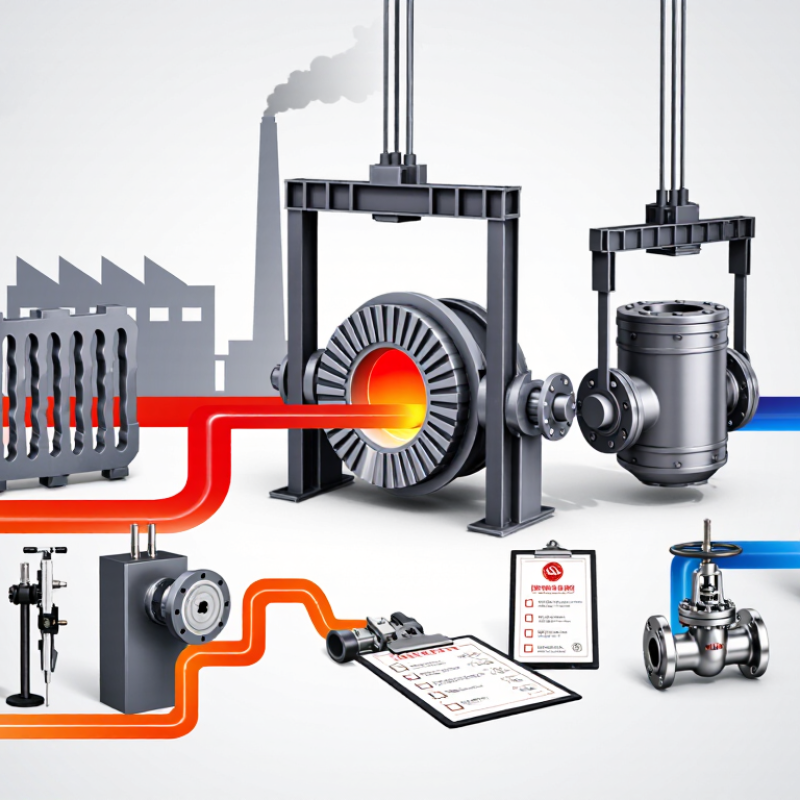
Heat-resistant castings support industries where ordinary steel loses strength, oxidizes, or changes shape. In China, common options include heat-resistant stainless steel, nickel-based alloys, and specialized iron alloys. Each suits a different temperature range and atmosphere. Furnace trays need resistance to creep and thermal cycling. Burner components need oxidation resistance and stable dimensions. Kiln fixtures face repeated heating and cooling.
Material selection should begin with operating conditions, not price. Engineers should check service temperature, load, heating speed, fuel atmosphere, and expected lifespan. A casting may survive 1,000°C in air but fail sooner in sulfur-rich gas. Wall thickness also matters. Uneven sections can create internal stress during cooling. The details matter.
Reliable suppliers should provide chemical analysis, heat-treatment records, dimensional reports, and traceability. Practical quality checks may include tensile testing, hardness testing, radiography, or dye penetrant inspection. In production reviews, small shrinkage defects often create larger failures after installation. That is risky. I have also seen designs over-specified without improving service life. Engineers should compare alloy performance with real furnace data. Laboratory results alone may not reflect vibration, deposits, or thermal shocks. A careful casting partner will discuss these limitations openly and adjust the design when evidence changes.
| Casting Material / Family | Typical Service Temperature | Main Heat-Resistance Mechanism | Key Properties | Common Industrial Applications | Suitable Casting Processes | Important Selection Considerations |
|---|---|---|---|---|---|---|
| Heat-resistant stainless steel, 18Cr–8Ni class | Approximately 800–900°C, depending on grade, load, and atmosphere | Chromium-rich protective oxide layer and nickel-assisted high-temperature stability | Good oxidation resistance, weldability, corrosion resistance, and general thermal durability | Furnace components, heat-treatment trays, burner parts, thermal shields, and general high-temperature fittings | Investment casting, sand casting, and shell-mold casting | Not normally selected for severe creep loading or highly carburizing atmospheres without grade-specific verification |
| High-chromium heat-resistant stainless steel, 25Cr–20Ni class | Approximately 950–1,100°C in oxidizing service, subject to design conditions | High chromium and nickel content improves oxidation resistance and resistance to thermal degradation | Superior oxidation resistance, good thermal cycling capability, and better high-temperature strength than standard stainless grades | Radiant tubes, furnace baskets, retorts, conveyor components, and heat-treatment fixtures | Investment casting, centrifugal casting, and precision shell casting | Check carbon content, thermal cycling frequency, distortion allowance, and atmosphere compatibility |
| Heat-resistant cast iron, high-silicon or alloyed grades | Typically approximately 500–800°C, depending on composition and mechanical loading | Silicon, chromium, nickel, or molybdenum additions improve oxidation resistance and structural stability | Good castability, vibration damping, dimensional stability, and cost efficiency for moderate-temperature service | Exhaust manifolds, furnace bases, covers, housings, and thermal processing supports | Sand casting, shell-mold casting, and centrifugal casting for selected geometries | Brittleness, thermal shock, section thickness, and casting stress must be evaluated before use |
| Nickel–chromium heat-resistant alloy castings | Approximately 900–1,200°C, depending on alloy chemistry and service environment | Nickel-based matrix, chromium oxidation resistance, and alloying elements that improve creep strength | Excellent oxidation resistance, high-temperature strength, creep resistance, and durability in demanding environments | Petrochemical furnace parts, reformer components, radiant tubes, retorts, burner nozzles, and kiln hardware | Investment casting, sand casting, centrifugal casting, and static precision casting | Higher material cost is justified when creep, carburization, oxidation, or long service life is critical |
| Cobalt-based heat-resistant alloy castings | Approximately 900–1,200°C, depending on alloy and mechanical stress | Cobalt matrix and carbide-forming elements provide hot hardness and wear resistance | Excellent hot wear resistance, thermal fatigue resistance, and strength retention at elevated temperatures | High-temperature valves, turbine-related components, furnace tooling, dies, and wear-resistant hot-work parts | Investment casting, precision casting, and specialized sand casting | Machining can be difficult, and material selection should account for cost, wear, thermal cycling, and joining requirements |
| Heat-resistant aluminum alloy castings | Generally suitable for continuous service below approximately 200–300°C, depending on alloy and load | Alloying additions and controlled microstructure reduce strength loss at moderately elevated temperatures | Low density, good thermal conductivity, corrosion resistance, and efficient heat dissipation | Automotive housings, air-cooled components, heat exchangers, and lightweight thermal-management parts | Permanent-mold casting, sand casting, low-pressure casting, and die casting for appropriate alloys | Not suitable for furnace temperatures typical of nickel alloys; verify creep strength and dimensional stability |
| Refractory ceramic castings | Often above 1,200°C; maximum temperature depends on ceramic composition and thermal shock conditions | Stable ceramic crystal structure, low chemical reactivity, and resistance to oxidation at very high temperatures | Very high refractoriness, low creep, chemical stability, and resistance to molten-metal attack in selected applications | Kiln furniture, furnace linings, burner blocks, thermocouple protection tubes, and high-temperature supports | Slip casting, gel casting, ceramic injection molding, and refractory mold forming | Brittleness and thermal shock sensitivity require careful heating, cooling, support, and dimensional design |
| Centrifugally cast heat-resistant tubes | Commonly designed for approximately 800–1,100°C, depending on alloy and process conditions | High-alloy composition combined with directional solidification and controlled wall structure | Dense wall structure, good resistance to internal defects, high oxidation resistance, and suitability for long tubular components | Radiant tubes, furnace rolls, reformer tubes, kiln tubes, and heat-treatment lines | Horizontal or vertical centrifugal casting | Tube diameter, wall thickness, straightness, weldability, creep life, and inspection requirements are critical |
Note: Temperature ranges are general engineering guidelines rather than guaranteed design limits. Final material selection should be based on the actual temperature profile, mechanical load, atmosphere, thermal cycling, corrosion or carburization risk, required service life, applicable standards, and inspection requirements.
They support furnace trays, burner parts, kiln fixtures, grates, and other high-temperature equipment. These parts face heat, oxidation, loading, and repeated thermal cycling.
Common choices include heat-resistant stainless steels, nickel-based alloys, and chromium-rich iron grades. Each material suits different temperatures, atmospheres, loads, and service periods.
Start with service temperature, mechanical load, heating speed, atmosphere, and expected lifespan. Price matters, but it should not control the decision alone.
A casting may survive 1,000°C in air but fail earlier in sulfur-rich gas. Deposits, fuel chemistry, and oxidation can change actual performance.
Production usually includes alloy melting, chemical analysis, mold preparation, pouring, finishing, and heat treatment. Pouring temperature must be controlled carefully.
Radiography or ultrasonic testing can reveal internal voids. Dye penetrant inspection can find surface cracks. Small shrinkage defects can become major failures later.
Request chemical analysis, heat-treatment records, dimensional reports, mechanical test results, and traceable batch numbers. Furnace charts can also show production control.
Request sample castings and inspect wall thickness, surface finish, porosity, and dimensions. A small trial order reveals communication and corrective-action habits.
No single test predicts every failure. Actual temperature maps, vibration, deposits, thermal shocks, and cooling speed may expose weaknesses that testing misses.
Uneven wall sections can create internal stress during cooling. Engineers should review distortion, shrinkage, machining allowances, and loading conditions before approving production.
Heat Resistance Castings are essential components in industries where equipment must operate reliably under extreme temperatures, thermal cycling, oxidation, and mechanical stress. This overview explains their industrial role and introduces commonly used materials in China, including heat-resistant stainless steels, nickel-based alloys, and specialized iron alloys. Each material offers different advantages in temperature capability, corrosion resistance, strength, and cost, making proper selection important for applications such as furnaces, boilers, kilns, power equipment, and thermal processing systems.
The article also examines how Chinese manufacturers produce and test these castings through pattern design, alloy melting, precision molding, heat treatment, dimensional inspection, and quality testing. It compares investment, sand, centrifugal, and other casting methods according to shape complexity, production volume, surface requirements, and operating conditions. Finally, it outlines how to evaluate a reliable supplier by reviewing technical expertise, material traceability, testing procedures, production capacity, communication, and quality consistency.

 Junlong