What Are the 2026 Best Wear Resistance Castings?

Time:2026-10-12 Author:Amelia
0%

Choosing the 2026 best Wear Resistance Castings requires more than comparing hardness values. Service conditions matter. A crusher liner faces impact, abrasion, and sudden temperature changes. A pump impeller may suffer erosion, corrosion, and cavitation at the same time. The strongest alloy on paper can fail quickly when its microstructure does not match the working environment.

Industry forecasts show why this decision matters. Grand View Research estimates the global metal casting market will continue expanding through 2030, supported by construction, mining, energy, and transportation demand. MarketsandMarkets also identifies automation, lightweight design, and advanced alloy development as major casting trends. These reports describe broad markets, not only Wear Resistance Castings. Their figures also use different methods. That limitation deserves attention.

John Campbell, a leading casting engineer and author, stated, “The quality of a casting is determined by the quality of the liquid metal.” His principle remains practical in 2026. Clean melting practice, controlled chemistry, suitable heat treatment, and reliable testing still shape field performance. Chromium white iron may deliver exceptional abrasion resistance. High-manganese steel may perform better under heavy impact. Ni-hard iron can suit specific sliding applications, but it is not a universal answer.

Real evidence matters more than marketing language. Buyers should review hardness profiles, impact results, metallography, dimensional records, and operating history. A casting that survives 2,000 hours in a laboratory may fail sooner in wet, contaminated ore. That is the uncomfortable part. No single “best” casting exists for every plant. This guide compares the leading 2026 options by alloy design, wear mechanism, manufacturing control, and verified service value.
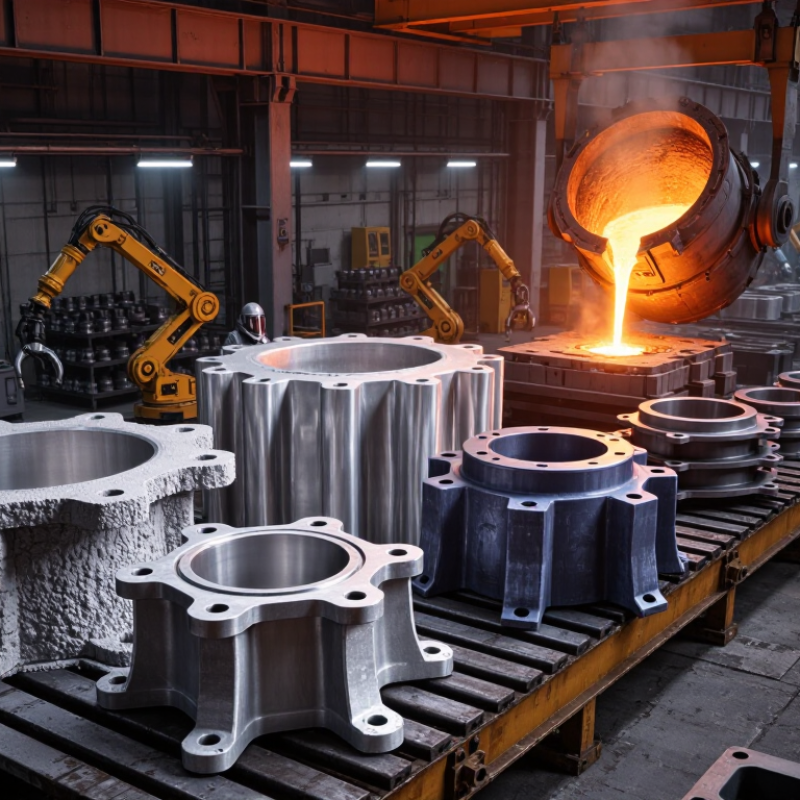
What Are the 2026 Best Wear Resistance Castings?

Definition and Role of Wear-Resistant Castings

Wear-resistant castings are metal components designed to resist material loss caused by abrasion, impact, erosion, or repeated sliding contact. Their role is practical: they protect working surfaces and keep machines operating under harsh conditions. In a quarry, for example, a liner may face sharp stone, dust, vibration, and sudden impact every hour. A suitable casting slows surface damage, preserves equipment geometry, and reduces unplanned replacement. This is not simply a matter of choosing the hardest alloy.

Engineers match casting chemistry and heat treatment to the actual wear pattern. High-chromium iron can perform well against abrasive particles, while alloy steel may better tolerate impact. Manganese-rich grades can harden during service, although their performance depends strongly on working conditions. Casting design also matters. Uniform wall thickness, sound internal structure, and controlled cooling help prevent premature cracking. Inspection methods, including hardness checks and visual or ultrasonic testing, provide useful evidence before installation.

The best 2026 casting is therefore the one that fits the application, not merely the newest specification. Operators should record service hours, failure locations, feed material, and maintenance intervals. These details turn field experience into better selection decisions. Still, predictions can be imperfect. A component that lasts well in dry sand may fail sooner in wet ore or under misalignment. I would treat supplier claims as starting points, then compare them with measured wear data from the actual machine. Small trial sections can reveal problems before a full production change.

What Are the 2026 Best Wear-Resistance Castings?

Wear-resistant castings are components engineered to withstand abrasion, impact, erosion, or sliding contact. The chart compares representative Brinell hardness ranges for common casting material families; actual values vary with alloy grade, heat treatment, and casting condition.

Higher hardness generally improves resistance to fine-particle abrasion, while impact-heavy applications may require a balanced combination of hardness and toughness rather than the highest hardness alone.

Key Materials Used in High-Wear Casting Applications

What Are the 2026 Best Wear Resistance Castings?

Key Materials Used in High-Wear Casting Applications

Wear-resistant castings begin with the working environment, not a fashionable alloy name. High-chromium white iron suits abrasive particles in chutes, pumps, and mill liners. Its hard chromium carbides resist cutting, but excessive impact can cause cracking. Austenitic manganese steel behaves differently. Under repeated impact, its surface hardens while the core remains tougher. It is useful for crushers, rail crossings, and large impact plates.

Alloy steel castings offer a practical balance between toughness and abrasion resistance. Heat treatment changes their hardness, strength, and service life significantly. Nickel-hard iron can perform well in sliding wear, especially where moderate impact is expected. However, it is less forgiving when the feed contains large, irregular rocks. The selection must include particle size, moisture, impact energy, temperature, and replacement access.

The scale of this market is substantial. World Steel Association data reported approximately 1.88 billion tonnes of crude steel production in 2023, supporting continued demand for durable industrial components. The USGS Mineral Commodity Summaries 2025 estimated global manganese mine production at about 20 million tonnes of contained manganese in 2024. These figures show the importance of alloying supply chains. Still, laboratory hardness is not the whole answer. A casting may test impressively and fail early in a wet, poorly aligned chute. Field inspection, fracture analysis, and controlled heat treatment remain essential. Sometimes, the “best” material is simply the one operators can replace safely and consistently.

How to Compare Casting Wear Resistance in 2026

What Are the 2026 Best Wear Resistance Castings?

How to Compare Casting Wear Resistance in 2026

The best wear-resistant casting depends on the working condition, not hardness alone. Compare abrasion, impact, temperature, load, and corrosion exposure before choosing an alloy. A casting used under dry sand needs different protection from one handling sharp mineral particles. In practical trials, record mass loss, surface damage, and service hours. Standardized tests, such as dry-sand rubber-wheel abrasion or pin-on-disk testing, improve comparison. Still, laboratory results cannot fully reproduce a vibrating chute or a wet slurry line.

Tips: Request test coupons from the same melt and casting section. Check hardness at several points, not one polished spot. Review the matrix, carbide shape, grain structure, and heat-treatment records. Ask for traceable chemistry and test conditions. Compare wear rate per operating hour, then calculate replacement labor and downtime. The cheapest casting may cost more after three failures.

Field experience also deserves weight. Inspect worn parts after removal, photograph grooves, and note impact marks or material buildup. A very hard surface may crack when impact is severe. A tougher casting may survive longer, even with faster abrasion. Our first assumption can be wrong. Recheck the failure mechanism before changing material. Supplier claims should support decisions, not replace measured evidence. Small differences in thickness, cooling rate, or heat treatment can change performance noticeably. Use side-by-side trials when production risk is high.

What Are the 2026 Best Wear Resistance Castings? - How to Compare Casting Wear Resistance in 2026

A practical comparison of common cast alloys for abrasive, impact, and sliding wear conditions

Casting Alloy / Family Typical Hardness Abrasive Wear Resistance Impact Toughness Sliding / Metal-to-Metal Wear Typical Service Temperature Best-Fit Applications Overall Wear Profile
High-Chromium White Cast Iron Approximately 58–68 HRC
Depending on chemistry and heat treatment
Excellent Low to moderate Good when abrasion dominates; may be vulnerable to impact Usually below approximately 500°C in continuous service Slurry pumps, mill liners, crusher parts, mineral-processing components Best for severe mineral abrasion
Ni-Hard White Cast Iron Approximately 500–700 HB
Grade and section size dependent
Very good to excellent Low to moderate Good in dry or mildly corrosive abrasive environments Commonly selected for moderate-temperature service Grinding balls, liners, pump parts, chutes, and abrasive handling equipment Strong general abrasive-wear option
Martensitic Alloy Steel Casting Approximately 400–650 HB
Heat-treatment dependent
Good to very good Moderate Good balance of hardness and toughness Often used below approximately 400–500°C, depending on grade Impact crushers, shovel components, bucket teeth, liners, and wear plates Best balanced hardness-to-toughness choice
Austempered Ductile Iron Approximately 350–550 HB
Grade and austempering condition dependent
Good Moderate to good Good fatigue and sliding-wear performance when properly specified Generally selected for low to moderate-temperature service Gears, rollers, sprockets, track components, and engineered wear parts Good wear-life and toughness compromise
Hadfield Austenitic Manganese Steel Approximately 180–250 HB as cast;
up to about 400–550 HB after work hardening
Moderate initially; good under high impact Excellent Limited for low-impact sliding wear; improves when repeatedly work hardened Commonly used for moderate-temperature applications Jaw crushers, railway crossings, impact liners, and high-impact handling equipment Best for repeated heavy impact
Alloyed Ductile Iron Approximately 250–450 HB
Grade and matrix condition dependent
Moderate to good Good Good for moderate sliding and contact wear Some silicon-alloyed grades are used at elevated temperatures; verify the grade specification Brake components, housings, rollers, pumps, and general engineering castings Versatile engineering-grade option
Gray Cast Iron with Pearl-itic Matrix Approximately 180–300 HB Low to moderate Low Good self-lubricating behavior in some dry sliding applications Generally selected for low to moderate-temperature service Machine bases, brake discs, housings, guideways, and lightly abrasive components Not suitable for severe impact or abrasion

How to Compare Casting Wear Resistance in 2026

  • For quartz, sand, ore, and other hard particles, prioritize matrix hardness, carbide content, and microstructural stability.
  • For impact-dominated service, prioritize fracture toughness and work-hardening behavior rather than maximum as-cast hardness.
  • For sliding or metal-to-metal wear, evaluate lubrication, counterface material, surface pressure, and scuffing resistance.
  • Compare test results only when the test method, abrasive, load, speed, temperature, and heat treatment are equivalent.
  • Hardness values are typical reference ranges, not guaranteed purchase specifications; final selection should use the applicable material standard and service test data.

Reference basis: commonly specified cast-alloy families and typical industrial property ranges. Actual performance varies with alloy chemistry, casting section size, heat treatment, microstructure, surface condition, and operating environment.

Best Wear-Resistant Casting Types by Operating Condition

In 2026, the best wear-resistant casting depends on the operating condition, not simply hardness. The 2024 USGS Mineral Commodity Summaries estimated global cement production at about 4.1 billion tonnes in 2023. That volume reflects the severe abrasion found in crushers, liners, and grinding systems. Fine particles demand a different casting than large, heavy impacts.

For dry sliding abrasion, high-chromium white iron usually performs well. Its hard chromium-rich carbides resist cutting and scratching. Martensitic alloy steel suits mixed abrasion and moderate impact. It offers better toughness when parts experience repeated loading. Hadfield manganese steel remains valuable in large-impact zones, such as crusher jaws and railway crossings. Its surface hardens during service. However, it may underperform under low-impact sliding wear. Hardness alone misleads.

Coal handling adds another challenge. The International Energy Agency reported global coal demand near 8.5 billion tonnes in 2023. Moisture, impact, and variable particle size can rapidly change wear patterns. In wet, abrasive slurry, corrosion-resistant alloy design deserves attention. In hot service, thermal stability matters more than peak room-temperature hardness. The 2024 World Steel in Figures report recorded roughly 1.89 billion tonnes of crude steel production in 2023, highlighting the scale of abrasive material handling worldwide. In practice, casting thickness, heat treatment, and impact energy can matter as much as chemistry. The boundary is not tidy. Field inspection should challenge laboratory assumptions.

Selection Factors for Cost, Service Life, and Maintenance

What Are the 2026 Best Wear Resistance Castings?

Choosing the best wear resistance castings starts with the working condition, not a hardness number. A liner handling dry sand faces different damage from a chute carrying wet ore. Sliding abrasion, impact, heat, and corrosion each demand a different alloy and casting design.

In field reviews, I compare material loss, cracking, and downtime over a full service interval. The cheapest casting can become expensive after repeated replacement. Cost should include machining, installation, spare inventory, and lost production. Service life must be measured in operating hours, not promises.

Ask for traceable chemistry, heat-treatment records, and test results matching the application. Practical trials remain valuable because laboratory abrasion rarely copies real feed size, moisture, or impact energy. A thicker section may improve life, but it can increase weight and handling risk.

Geometry matters. Uneven wear often signals poor flow, misalignment, or an unsuitable hardness profile.

Harder is not always better. Brittle edges may chip under impact.

Selection is not always certain. Honest review matters. Record actual wear after installation, even when results disappoint.

Tips:

  • Define the failure mode before ordering.
  • Request sample data from similar duties.
  • Compare cost per operating hour.
  • Inspect high-wear zones weekly at first.
  • Keep an approved repair plan ready.
  • Recheck the choice after seasonal changes.
  • Small records prevent expensive guesses.

FAQS

What makes a casting wear-resistant in 2026?

Wear resistance depends on working conditions, not hardness alone. Consider abrasion, impact, temperature, load, and corrosion. Harder is not always better.

Which tests help compare casting wear resistance?

Dry-sand rubber-wheel abrasion and pin-on-disk tests provide useful comparisons. Record mass loss and surface damage. Laboratory results may differ from field performance.

What evidence should buyers request from a casting supplier?

Request traceable chemistry, heat-treatment records, and application-matched test results. Ask for test coupons from the same melt and casting section. Small details matter.

How should hardness be checked?

Measure hardness at several locations across the casting. Do not trust one polished spot. Hardness can vary with thickness, cooling rate, and heat treatment.

Why can a tougher casting outperform a harder casting?

Severe impact can crack a very hard surface. A tougher casting may tolerate repeated blows and survive longer. This sounds backward, but field damage can confirm it.

How should real service life be measured?

Measure wear rate per operating hour. Record mass loss, grooves, cracks, and material buildup. Include replacement labor, installation, spare parts, and downtime.

Can laboratory results predict performance in a chute or slurry line?

Not completely. Real equipment includes vibration, moisture, feed-size changes, and uneven impact. Side-by-side field trials often reveal more. Conditions are rarely perfect.

What should be inspected after a casting is removed?

Photograph grooves, chips, cracks, and buildup. Mark high-wear areas on a simple sketch. Review flow, alignment, and impact direction. Our original assumption may be wrong.

How can maintenance teams reduce replacement costs?

Inspect high-wear zones weekly during early service. Keep an approved repair plan and spare inventory. Recheck performance after seasonal changes. Small records prevent expensive guesses.

Conclusion

Wear Resistance Castings are engineered components designed to withstand abrasion, impact, erosion, and repeated friction in demanding industrial environments. Their performance depends largely on material selection, heat treatment, casting quality, and the specific type of wear involved. Common material choices include high-chromium alloys, manganese steel, martensitic steels, and other alloyed irons, each offering different balances of hardness, toughness, and impact resistance.

In 2026, the best casting should be evaluated through practical indicators such as hardness retention, impact strength, dimensional stability, service life, and resistance to the actual operating conditions. Abrasive applications may require extremely hard castings, while high-impact environments benefit from tougher materials that resist cracking. Temperature, load, particle size, operating speed, maintenance access, replacement frequency, and total cost should also guide selection. The ideal solution is not always the hardest option, but the one that delivers reliable performance, manageable maintenance, and the lowest overall cost throughout its working life.


Amelia

Amelia

Amelia is a seasoned marketing professional with a wealth of expertise in our company’s core offerings. With an unwavering passion for driving growth and innovation, she plays a pivotal role in shaping our marketing strategies and enhancing brand visibility. A key aspect of her responsibilities......